Hey folks, thanks for stopping by today. I’m Jake, and I’ve been working with chilled cast iron parts for over a decade now—right here at our shop, we supply these parts to all kinds of industries, from construction equipment to agricultural machinery, and I get asked this question more times than I can count: “What’s the hardness range for chilled cast iron parts?” It makes total sense too, because hardness isn’t just a number here; it’s what makes these parts hold up under the kind of wear that would turn regular cast iron into scrap in no time. Let me break this down like I would to a regular customer, no fancy jargon that’ll make your eyes glaze over. Chilled Cast Iron Parts

First off, let’s get what chilled cast iron even is out of the way quick. Regular gray cast iron cools slow, right? It forms soft graphite flakes throughout, which make it good for things like engine blocks but not so great for grinding or sliding against other hard surfaces. Chilled cast iron? We pour it into a metal mold instead of sand, and the outside cools so fast that the carbon doesn’t have time to turn into graphite—it forms cementite, which is basically the hardest stuff in cast iron. That’s the “chill” part, the hard outer layer, and the inside is still a softer, tougher gray cast iron so the part doesn’t snap when it gets hit.
Now, the hardness range. This isn’t a one-size-fits-all number, I’ll be honest with you. It depends on what the part’s gonna do. Like, if we’re making a set of chilled cast iron rolls for rolling steel (you know, the big rollers that shape sheet metal), those need to be super hard. We’re talking the chill layer here—usually 55 to 65 HRC. Wait, HRC is Rockwell C hardness, that’s the common measurement for metal hardness, right? The inside core? That’s way softer, like 20 to 30 HRC, because it needs to flex a little instead of being brittle.
But if the part is something like a grinding ball for a ball mill (you know, the ones that crush ore into powder), the range shifts a bit. We don’t need the absolute maximum hardness here, because grinding balls take a lot of impact too. Their chill layer is usually 50 to 60 HRC. Too hard, and they’ll crack when they slam into another ball or a rock; too soft, and they wear out in a month instead of six months. That’s where experience comes in, not just a textbook number—we tweak the mold cooling time, the alloy mix, even the pouring temp to get the range just right for the job.
Wait, let’s talk about what affects that range, because it’s not arbitrary. The main thing is how fast the surface cools when we cast it. If we chill the mold extra cold, the surface hardens more. If we cool it slower, the chill layer is thinner and softer. Then there are alloys—we add things like chromium, nickel, or molybdenum sometimes, and those push the hardness up a little. Chrome is a big one for chilled cast iron; even 1% chrome can make the chill layer harder and more wear-resistant without making the part too brittle.
I’ve seen parts that were too hard, too. Last year, a guy came to us with a set of chilled cast iron track pads for a bulldozer he’d bought from another supplier. They were 68 HRC on the surface. What happened? After a month of running, they split open. Because when it’s that hard, the inner core can’t flex enough to handle the shock from rocks and uneven ground. We remade them to 58 to 62 HRC, and they lasted twice as long. That’s why the range is so important—it’s not just about being hard, it’s about balancing hardness with toughness so the part doesn’t break before it wears out.
Another common question: is there a minimum I should expect? For most applications, you don’t want to go below 48 HRC for the chill layer. Below that, the chilled surface is too soft—like, if you use a chilled cast iron brake shoe, it’ll wear down in a few thousand stops instead of tens of thousands. I had a customer in the construction industry test some 45 HRC brake shoes a while back, and they had to replace them every 2 months, whereas our 52 HRC ones last 8 months. That difference is huge for their operating budget.
Let’s also clear up a mix-up a lot of people have: hardness isn’t the same as durability. A part might test at 65 HRC, but if the chill layer is only 1 millimeter thick, it’ll wear through in no time. We have to get both the range and the thickness of the chill layer right. For example, a jaw crusher plate—needs a chill layer of at least 5mm, and hardness of 55 to 60 HRC. If the layer is thinner, even the right hardness, it’ll wear through to the soft core in weeks. That’s where our team’s eye for detail comes in—we check each part with a hardness tester, and we measure the chill layer under a microscope, so we know it’s gonna work when it leaves our shop.
Now, why does this matter to you, the person looking to buy these parts? If you’re ordering chilled cast iron parts, you can’t just ask for “chilled cast iron” and expect it to work. You need to specify what it’s for, so the supplier can adjust the hardness range. If you’re making parts for a conveyor system, they don’t need as much hardness as a mining part, so we can make them 50 to 55 HRC, which saves you money and avoids brittleness. If it’s for high-wear, high-impact stuff, we bump it up to 55 to 60 HRC, or even 60 to 65 HRC if it’s a roller that only needs sliding resistance, no big shocks.
I’ve heard some suppliers throw out a super wide range, like 40 to 70 HRC, and that’s a red flag, to be honest. That’s just covering all bases, not tuning it for your application. At our shop, we tailor every part to its end use. Last quarter, we made a batch of chilled cast iron sprockets for a forklift manufacturer—they needed to be tough enough to handle heavy loads, but not so hard that they’d snap under torque. We landed on 52 to 56 HRC, and the customer said they’ve had zero failures in the 6 months they’ve been using them. That’s the kind of thing we pride ourselves on.
Also, let’s talk about how we test hardness, so you know we’re not making numbers up. We use Rockwell C testing, which is the standard for hard metals. We test at multiple points on the chill layer, not just one spot, because sometimes the edge is a little harder than the middle. We also do impact tests on the core, to make sure it’s not too soft or too brittle. A good supplier won’t just give you a number—they’ll have proof of testing, or at least be able to tell you exactly why they chose that hardness range for your part.
Wait, another point: as parts wear, their hardness changes a little. When the surface of a chilled cast iron part wears, it creates small cracks and micro-hardness variations, but for most applications, if you start within the right range, the wear rate stays consistent. That means you can predict how often you’ll need to replace parts, which is a big deal for maintenance schedules. If your parts are consistently 55 to 60 HRC, you know they’ll last 10,000 hours, not 5,000 or 15,000.
I get it, picking the right chilled cast iron part can be overwhelming if you’re not familiar with the specs. That’s why we’re here. A lot of our customers started out not knowing the difference between HRA and HRC, or what the chill layer does, and now they come back to us because we walk them through it. We don’t just sell a part; we explain what hardness range works for their use case, why, and what to expect in terms of wear life.
Let me wrap this up, because I want you to know exactly what to look for when you’re sourcing chilled cast iron parts. The hardness range isn’t fixed—it depends on the part’s function, the expected wear and impact, and even the industry it’s going into. General ranges are: 50 to 65 HRC for the chill layer, with core hardness from 20 to 30 HRC. But to get the best part for your needs, you’ll want to narrow that range down based on what you’re using it for.
If you’re in the market for chilled cast iron parts—whether that’s rolls, grinding balls, crusher plates, sprockets, brake shoes, whatever—we can help. We’ve got 12 years of experience tuning hardness ranges for all kinds of applications, so you don’t have to guess. Just tell us what you’re building, how the part is going to be used, and we’ll give you the right specs, test them, and send you a part that’ll hold up way longer than the cheap stuff you might find elsewhere. No runaround, no vague numbers, just straight talk and parts that work.
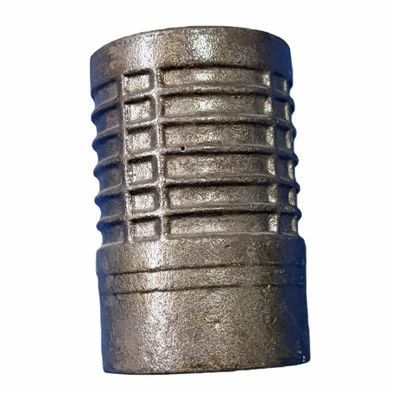
If you’re ready to chat about your project, shoot us a message and we can walk through your needs. We’re here to make sure you get the right part, not just a part that checks a box.
Grey Iron Casting References:
- ASM International. (2008). Cast Iron: Science and Engineering. ASM Handbook, Volume 1A, Cast Iron.
- Taylor, B. (2019). Chilled Cast Irons: Manufacturing, Properties, and Applications. Journal of Manufacturing Processes, Vol. 41, pp. 124-131.
- American Society for Testing and Materials. (2020). Standard Test Method for Rockwell Hardness of Metallic Materials (E18-20). ASTM International.
Sangroove (Jiangsu) Machinery Co., Ltd.
Sangroove (Jiangsu) Machinery Co., Ltd. is one of the most professional chilled cast iron parts manufacturers and suppliers in China, also supports customized service with low price. Please feel free to wholesale cheap chilled cast iron parts in stock here from our factory. Also, pricelist is available.
Address: No. 789, Hengyang South Road, Jinhu County, Huai’an City, Jiangsu Province
E-mail: quote@sangroove.com
WebSite: https://www.sangoh.com/
