Hey everyone, let’s cut to the chase—if you’ve ever stared at a sleek, stainless steel water bottle and wondered, “Wait, does this thing actually have a vacuum seal?” you’re not alone. As a supplier of insulated bottles, I get this question at least a dozen times a week, and honestly? It’s the kind of question that makes people overcomplicate it way more than they need to. Today, I’m gonna break this down like we’re grabbing coffee after a long day at the warehouse—no fancy jargon, just straight-up facts. Insulated Bottles
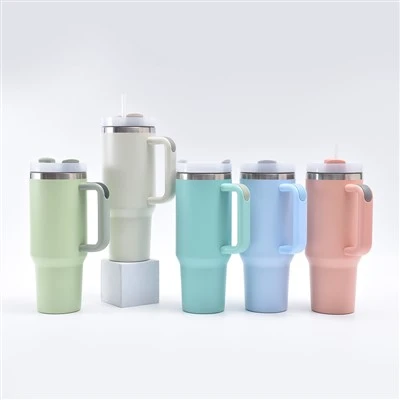
First off, let’s talk about what a vacuum seal even is. I know, it sounds like something out of a science textbook, but stay with me. Think about when you seal a bag of chips—you suck the air out to keep them fresh, right? A vacuum seal for bottles works the exact same way, but instead of food, it’s about keeping temperature locked in. Here’s the key part: insulated bottles that are worth their salt (no pun intended) have a double-wall design. That means there’s an inner wall and an outer wall, usually made of stainless steel, and the space between them? That’s the vacuum chamber.
Here’s where the science gets simple. Air is a conductor of heat—so if there’s air between the two walls, heat can move back and forth easy. The vacuum removes almost all that air, so there’s nothing to carry heat. That’s why your morning iced coffee stays cold for 12 hours, or your hot soup stays piping hot all the way to lunch. If there’s no vacuum seal, that temperature just escapes—your coffee will be room temp by mid-morning, and let’s be real, that’s a disaster.
Now, let’s address the elephant in the room: not all insulated bottles have a proper vacuum seal. I see this all the time—cheap knockoff bottles on Amazon, random ones at gas stations, they’ll say “insulated” but skip the vacuum step. How can you tell? Well, for one, the price. If a bottle is under $10, chances are it’s not a true vacuum-sealed one. It might have a single layer with some foam insulation, but that’s not the same. Foam is okay for basic insulation, but it can’t hold heat nearly as well as a vacuum. Another tell? The weight. Vacuum-sealed double-wall bottles are a little heavier than flimsy plastic ones, but not by much—if it feels like it’s made of tin foil, walk away.
Wait, but what about the seal around the lid? A lot of people mix up the lid seal with the vacuum seal. That’s a common mistake! The lid’s silicone gasket is what keeps leaks out, but the vacuum seal is the secret to temperature control. Even if your lid is super tight, if there’s no vacuum between the walls, your drink won’t stay hot or cold. At our company, we test every single bottle’s vacuum seal before it leaves the warehouse—we use a pressure tester to make sure there’s no air leaking into that inner space. If a bottle fails, it gets tossed. No exceptions.
Let me share a quick story that drives this home. A few months back, a regular customer (they run a local café) reached out saying some of their “budget” insulated bottles weren’t keeping their cold brew cold during weekend farmers’ markets. They were buying from a supplier who cut corners—no proper vacuum seal, just a thin double wall with air in between. We sent them a sample of our vacuum-sealed bottles, and by the next week, they were ordering 500 more. They told us the cold brew stayed ice cold for 14 hours, even on 90-degree days. That’s the power of a real vacuum seal.
Another thing people ask: does the vacuum seal ever break? Yep, it can. If you drop your bottle really hard, or scratch the inner wall, sometimes that tiny hole forms in the double wall. When air gets back into that space, the vacuum is gone, and the bottle is just… a regular insulated bottle. We always tell our customers to be gentle with their bottles, but accidents happen—we’ve got a warranty that covers manufacturing defects, so if your vacuum seal breaks within a year, just reach out. No hoops to jump through, promise.
Now, let’s get into why we use vacuum seals instead of other insulation methods. You might have seen bottles with copper lining, or foam, or even gel packs. Copper is actually a great heat reflector, so it’s often added to the outer wall for extra insulation, but it doesn’t replace the vacuum. Foam is bulky, and gel packs add weight and can leak if the bottle breaks. The vacuum is the sweet spot—it’s lightweight, durable, and way more effective at temperature control than any other method. That’s why every premium insulated bottle on the market uses it.
Wait, let’s clear up a myth too: some people think vacuum seals are only for expensive bottles. That’s not true! You can get high-quality vacuum-sealed bottles at a fair price—we make ours with food-grade stainless steel, BPA-free lids, and a tight vacuum seal, and we price them so they’re accessible for everyone, not just big companies. We work with small businesses, families, students, even gyms—no order is too small.
Here’s a tip if you’re shopping for an insulated bottle: check the product description for “vacuum-insulated” or “vacuum-sealed.” If it just says “insulated,” that’s a red flag. Read the reviews—people usually mention how long their drinks stay hot or cold, so if a review says “my coffee was cold by noon,” that’s a sign no vacuum seal. And if you’re still unsure, hit up a supplier directly—we’re always happy to answer questions, no pressure.
As someone who’s been in the insulated bottle game for years, I can say this: a vacuum seal is the whole point of a good insulated bottle. Without it, it’s just a nice-looking container. With it, it’s a game-changer for your morning commute, your hikes, your workdays, whatever. We don’t cut corners on the vacuum seal because we know how much it matters—we’ve tested it, we’ve seen the difference, and we stand behind every bottle we make.
If you’re a business looking to stock insulated bottles, or you’re a customer who wants to buy in bulk, feel free to reach out to us. We can send you samples, answer any questions you have about our vacuum seal process, and work with you to get the right bottles for your needs. No complicated forms, no pushy sales pitches—just straightforward, honest info.
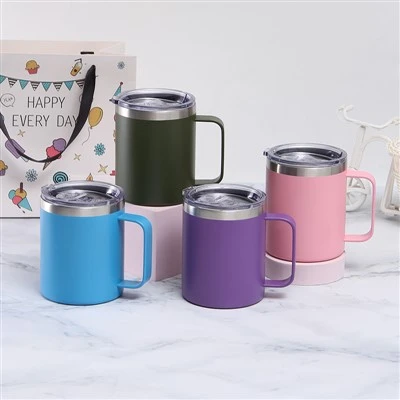
At the end of the day, a vacuum seal isn’t some fancy tech only for scientists. It’s what keeps your hot cocoa hot when it’s freezing outside, and your iced tea cold when the sun’s blazing. And that’s why we make sure every single one of our bottles has a proper, tested vacuum seal. If you ever have more questions, don’t hesitate to connect with us—we’re here to help.
Mug References
- International Copper Association. (2022). Vacuum Insulation in Consumer Products.
- ASTM International. (2021). Standard Test Method for Vacuum Integrity of Metallic Bottles.
- Food and Drug Administration. (2020). Food-Grade Stainless Steel Materials for Food Contact Use.
Yongkang Paixin Trading & Manufacturing Co., Ltd.
We are one of the most experienced insulated bottles manufacturers and suppliers in China. With a professional production team, we are able to meet the needs of the majority of our customers. Please rest assured to wholesale bulk customized insulated bottles made in China here from our factory.
Address: No. 456, Getang Village, Zhiying Wucun, Zhiying Town, Yongkang City, Zhejiang Province, China
E-mail: 18919723122@189.cn
WebSite: https://www.paxincup.com/
