If you’ve ever sipped from a water bottle, a soda container, or a jar of pickles, you’ve held an item that began life in a family plastic bottle mold. For anyone outside the packaging industry, the term might sound like a piece of kitchen equipment for a home hobby, but for suppliers like my team, it’s the core of how affordable, consistent plastic packaging gets made for millions of households and small businesses every single day. Let’s break down what a family plastic bottle mold is, how it works, and why it matters for anyone looking to scale or refine their plastic packaging line. Plastic Bottle Mold
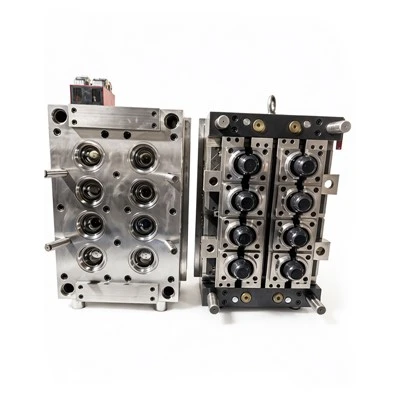
First, let’s clear up the name. Unlike industrial, large-capacity molds used for big brand production runs that make thousands of bottles an hour, a family plastic bottle mold isn’t a single tool—its “family” label comes from the fact that it’s a set of two or more molds, all built to share the same base plate and machine setup. That shared base is the key difference: you don’t have to adjust your injection molding machine’s alignment, clamp force, or material feed every time you switch from making a 500ml water bottle to a 1L juice bottle, for example. The only thing you swap out is the insert cavity (the part that forms the actual shape of the bottle) and the core (the part that makes the inside, including threads for caps, neck finishes, and any indentations). For small to mid-sized production runs, this cuts downtime dramatically, which saves money and speeds up turnaround times.
Let’s get into the science of what these molds are made of, because quality here isn’t just about shape—it’s about durability and consistency. Most family plastic bottle molds are constructed from P20 tool steel, a common grade that balances machinability and hardness, perfect for low to mid-volume runs (up to around 1 million cycles, depending on how thick the bottle walls are). For higher-volume runs, some of our clients choose H13 steel, which is tougher and can handle up to 2 million cycles, making it ideal for repeat production of the same bottle shape across multiple molds in the same family. The cavities are precision-machined with CNC mills, then polished to a mirror finish to ensure the bottle’s surface is smooth, no blemishes, and easy to demold without sticking. That polish is critical for food-safe packaging, too—any rough edges on the mold can create micro-grooves that trap bacteria, which is a non-negotiable for bottles holding food or beverages.
How do we design a family plastic bottle mold? It starts with a client’s 3D CAD file of their bottle, right down to the thread pitch for the cap. Our engineering team runs simulation software to test how molten plastic will flow into all the cavities at once, because in a family mold, every cavity has to fill evenly. If one cavity fills faster than another, the bottles will have uneven wall thickness, which can make them leak or break under pressure—think of a soda bottle that collapses when you squeeze it too hard. We also account for cooling: after the plastic is injected, it needs to cool uniformly so it doesn’t warp. That’s why each cavity in the family mold has its own cooling channels, sized to match the size of the bottle they’re forming. A small 200ml travel bottle has smaller cooling channels than a 2L detergent bottle, so the whole set can work in sync.
One of the biggest advantages of a family plastic bottle mold is its versatility for small and emerging brands. If you’re a craft soda maker launching three different flavors, each in a slightly different bottle size but same cap thread, a family mold lets you make all three on the same machine, no reconfiguration. Before our clients started using family molds, many would have to run separate production jobs for each bottle, switching out the entire mold every time, which could take hours of setup and cause delays for their product launch. With a family mold, that swap takes 10 or 15 minutes, so they can run all three bottles in a single shift. For a small business that doesn’t have a huge production budget, that flexibility is a game-changer—they don’t have to invest in multiple machines to offer different packaging options.
It’s not just small brands that benefit. Some of our long-term clients are mid-sized companies that use family molds to test new product lines without the risk of a big investment. If a brand wants to test a 750ml cold brew bottle and a 300ml sample bottle, they can add those two cavities to their existing family mold set, instead of buying an entirely new mold. That means they can adjust their production based on how the sample performs, without wasting money on a tool that only works for one bottle shape. We also build custom family molds that include multi-cavity sets for higher output—some of our molds have up to 12 cavities in a single family, so a client can make 12 bottles at once, which speeds up large orders for retail stores.
Now, let’s talk about common mistakes to avoid when working with a family plastic bottle mold. One is not accounting for shrinkage. Plastic shrinks as it cools—most common packaging plastics like PET or HDPE shrink between 1% and 3%, depending on the resin type. Our engineering team builds that shrinkage into the mold design: if a bottle is supposed to be 100mm tall, we make the cavity 101mm to 103mm tall, so when the plastic cools, it ends up at the right size. If a client skips that step, their bottles will be too small, and the caps won’t fit. Another mistake is using the wrong resin for the mold. While family molds work with most packaging resins, some higher-temperature plastics like PP for yogurt containers can wear down P20 steel faster, so we recommend H13 steel for those applications to extend the mold’s lifespan.
I should also mention maintenance, because even the best family mold won’t last if it’s not cared for. Our team provides clients with a maintenance guide that includes regular cleaning of the cavities and cores, checking the cooling channels for blockages, and lubricating the mold’s moving parts. For clients running a mold every day, we suggest a deep clean every 20,000 cycles to remove plastic residue that can build up and cause defects. Many of our clients skip this step at first, and end up with batches of bottles that have streaks or uneven surfaces—small issues that can hurt a product’s brand image.
So, who uses family plastic bottle molds? Let’s break down the most common industries: beverage brands (water, soda, juice, craft drinks), food packaging (jams, pickles, sauces), personal care (shampoo bottles, lotion containers), and industrial packaging (detergent, cleaning products). For each, the family mold’s ability to produce multiple compatible bottles is key. For example, a cleaning product brand might have a 500ml spray bottle, a 1L refill bottle, and a 2L bulk bottle—all with the same cap, so customers can refill and reuse, which is a big selling point for sustainability. A family mold lets them make all three in one run, ensuring consistency in the cap fit and bottle design, which builds brand trust.
Sustainability is another angle that’s become more important in recent years. Family molds reduce waste in two ways: first, because they’re reusable, a single mold set can produce hundreds of thousands of bottles over its lifespan, instead of multiple single-use molds that would be discarded after a small run. Second, the ability to switch between bottle sizes without reconfiguring the machine means brands can produce only what they need, reducing overproduction of packaging that might go unused. Many of our clients are focused on reducing their carbon footprint, and family molds help them do that by cutting down on setup energy use and minimizing material waste from mold changes.
If you’re new to packaging production, you might be wondering why not just use a single-cavity mold for each bottle size. For startups or small batches, a single-cavity mold can be cheaper upfront, but over time, it’s more expensive. Think of it this way: if you have three bottle sizes, a single-cavity mold would mean three separate tools, three setups, and three machine runs. A family mold is one tool, one setup, and one run, so you save on labor, machine time, and storage for extra molds. For mid-sized brands that want to scale, the family mold is a more cost-effective long-term solution.
Our team has worked with hundreds of clients to design and build custom family plastic bottle molds, and we’ve seen firsthand how they can turn a good idea into a producible product. Last year, we worked with a small craft brewery that wanted to launch a line of 355ml beer bottles, 500ml growlers, and 1L mini kegs—all with a standard cap for consistency. They started with a single-cavity growler mold, but when demand for the beer picked up, they came to us to add the smaller bottles to a family mold set. Within a week, we had the new cavities machined and installed, and they were able to run all three bottle types on the same machine, doubling their output without adding extra equipment. That’s the kind of flexibility family molds bring to brands that are growing.
Now, if you’re considering investing in a family plastic bottle mold, there are a few questions to ask yourself first. What resin will you be using? What are the sizes and types of bottles you need to produce? What’s your production volume? Our team can help you answer these questions, and design a mold that fits your specific needs—whether you’re a startup launching your first product, or a mid-sized brand expanding your line. We offer custom designs, engineering support, and maintenance services to make sure your mold works as efficiently as possible for years to come.
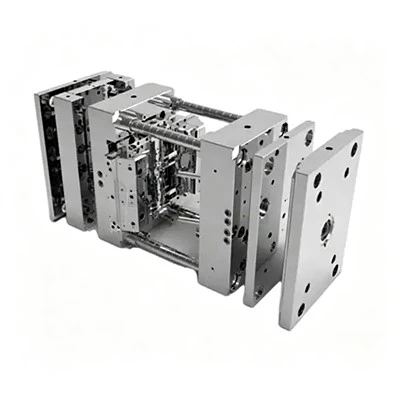
At the end of the day, a family plastic bottle mold is more than just a piece of metal—it’s a tool that lets brands innovate, scale, and adapt to what their customers need. Whether you’re looking to launch a new product line, increase your production capacity, or streamline your packaging process, a family mold is a cost-effective, flexible solution that can take your brand from concept to shelf. If you’re ready to learn more about how a family plastic bottle mold can work for your business, feel free to reach out to our team to discuss your project details and get a custom quote.
Laboratory Consumables Molds References
- Injection Molding Magazine. “Family Molds: Design and Application for Packaging.” 2022.
- Society of Plastics Engineers. “Tooling for Plastic Packaging: Material Selection and Durability.” 2021.
- Packaging Digest. “Sustainable Packaging Solutions for Small to Mid-Sized Brands.” 2023.
- Machining Science and Technology. “Precision Machining of Tool Steels for High-Volume Molding.” 2020.
- Food and Drug Administration. “Food-Grade Plastic Packaging: Mold Design and Sanitation Guidelines.” 2022.
Taizhou Koni Mould Co., Ltd.
As one of the most professional plastic bottle mold manufacturers and suppliers in China, we also support customized service. Please feel free to wholesale high quality plastic bottle mold made in China here from our factory. For pricelist, contact us now.
Address: No. 97 Jinju Road, Chengjiang Subdistrict, Huangyan District, Taizhou City, Zhejiang Province
E-mail: kn@kenimould.com
WebSite: https://www.kenimouid.com/
