Hey there, if you’re deep in the recycling game, you’ve probably stared at a mixed pile of glass and plastic at some point, scratching your head like, “How do I split these efficiently without losing half my product to wrong fractions?” As a guy who’s been around air suction separators (ASUs) for over 10 years—running sales, troubleshooting, and geeking out over the tech that makes these machines work day in and day out—this question’s come up more times than I can count: can an air suction separator actually separate glass and plastic? Spoiler: the short answer is yes, but it’s not a one-size-fits-all click-and-run. Let me break this down like I would with a client who just walked in my warehouse, no fancy jargon, no BS. Air Suction Separator
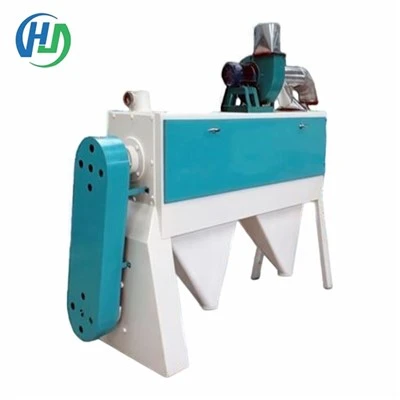
First, let’s get on the same page about what air suction separators do, because not everyone knows the basics (I’ve had so many new recyclers think it’s a giant vacuum that just sucks up light stuff—close, but not quite). An ASU works on something called terminal velocity, which is just the speed at which a particle falls through still air. Every solid object has a unique terminal velocity, right? Drop a feather and a penny, the penny hits the ground first because its terminal velocity is way higher. Same goes for glass vs. plastic—their terminal velocities sit in different ranges, usually, if you’re dealing with the right sizes of material.
Wait, hold on—size is a huge catch here, and that’s where most people mess up. Let’s do a quick real-world example: take a 1-inch (2.5cm) PET water bottle flake and a 1-inch clear soda bottle glass flake. The PET flake has a terminal velocity around 10-12 m/s, and the same-sized glass flake is around 18-20 m/s. That’s a big enough gap that a well-calibrated ASU will blow the lighter plastic flakes up and out one outlet, while the heavier glass stays in the air stream just long enough to drop into another outlet. Makes sense, right? But what if the glass is super tiny? Like, 0.25 inch (0.6cm) crumb glass? Its terminal velocity drops to 5-7 m/s. And if you have that mixed with 0.25 inch PET flakes, which are around 6-8 m/s? The gap almost disappears. Suddenly, those two are bouncing around the air stream together, and you’re getting cross-contamination. That’s why sorting feed sizes is non-negotiable. If your feed is all over the place—big chunks, tiny bits, mixed textures—your ASU can’t do its job. I’ve seen clients try to skip the size screening step just to save 10 minutes, and end up with 20% of glass in their plastic bales, which gets them a lower payout from mills. Worth it? Absolutely not.
Now, not all plastics are created equal, either. That’s another myth I need to bust. A lot of people think “plastic” is just plastic, but it’s not—we’re talking PET, HDPE, PP, PVC, LDPE, all with different densities and terminal velocities. PVC, for example, is way denser than PET or HDPE, so its terminal velocity is higher than most common packaging plastics, closer to glass. Wait, no—let me check that again. 1-inch PVC flake is around 16 m/s, so that’s between PET (12) and glass (18). Oh, so if you’ve got PVC mixed with PET and glass, it’ll probably go with the glass fraction? That’s a big deal for recycling, because PVC is a contaminant in PET streams—mills don’t want it, and it ruins the quality. So an ASU can actually help strip PVC out too, as long as you’re calibrating for that specific mix. Another example: LDPE, the thin film plastic you get from grocery bags, has a super low terminal velocity—like 4-5 m/s for a 1-inch flake. If you have LDPE mixed with small glass crumbs, both are at that lower end, so they’ll come out together. That means if you’re separating glass from film plastics, you might need a pre-screen or a secondary step, but the ASU still handles the heavier, higher-density stuff like PET and HDPE pretty reliably.
Let’s talk about how we calibrate our ASUs for glass and plastic, because that’s the secret sauce that makes it work, not just the machine itself. Our team trains clients on this, but I’ll spill a bit here. First, you run a test feed—like a 2-pound (0.9kg) sample of your actual mixed material, not some lab sample, but the real gunk you process every day. You drop that into the ASU’s feed hopper, which breaks up chunks and feeds it evenly (uneven feeding is another big mistake—if all the material comes in at once, some gets overblown, some doesn’t get blown enough). Then you adjust the air flow first: we use variable-speed blowers, right? So you start low, and crank it up until the lightest plastic flakes lift up, but the heaviest glass bits don’t get carried away. Wait, no—wait, it’s a balance. If you crank the air too hard, you’ll blow some heavy glass into the plastic side, and if it’s too soft, some light plastic will drop with the glass. We usually adjust the air speed in increments of 0.5 m/s, and maybe tweak the splitter plate that divides the two outlets by a quarter of an inch to fine-tune. I’ve had clients call me panicking because their separation is 85% good, and 15% bad, and it’s almost always a calibration tweak, not a machine issue. Last month, a guy in Ohio was separating glass from post-consumer PET, and he was getting 12% glass in his plastic. We hopped on a 15-minute Zoom call, walked him through adjusting the blower speed and the splitter, and by the end, he was down to 1.2% cross-contamination. That’s the stuff that makes my job worth it.
But wait, are there limits? Let’s be real—no machine is perfect, and ASUs aren’t either. First, if your material is wet? Big no-go. Water adds weight, so a wet plastic flake is heavier than a dry one, and a wet glass flake is heavier too, but not in the same ratio. I’ve seen people try to run wet mixed material, and it just clumps, so it acts like a bigger, denser particle that doesn’t separate. So you need a drying step before the ASU, usually a rotary dryer or a centrifuge, depending on your throughput. Second, if the plastic is coated or has a lot of residue? Like, food residue on a PET flake makes it heavier, similar to glass, so that messes with terminal velocity. We recommend a washing step after sorting or before, depending on your setup, to reduce that residual weight. Third, ultra-fine particles—like dust, tiny glass powder, micro-plastics—those have super low terminal velocities, and the air stream will just keep them suspended, so they might come out in both fractions. For that, you’d add a dust collector after the ASU to pull out those super fine bits, since they’re a contaminant anyway.
I’ve also had clients ask, “Why not use an eddy current separator (ECS) instead?” Oh, that’s another good question. ECS works on metal particles, using magnetic fields to push non-ferrous metals away. Glass and plastic are non-conductive, so ECS does nothing for them. So ASU is the go-to for that, unless you have a mix of metal, glass, and plastic, then you run ECS first to pull metals, then ASU to split glass and plastic. That’s a common two-step process we recommend for municipal recycling centers, and it works like a charm.
Now, let’s talk real-world results, not just theory. Last year, we installed a system at a mid-sized recycling plant in Michigan that processes 5 tons of mixed glass and plastic per hour. They were previously using a manual sorting line, which cost them 3 part-time guys, and had 15-20% cross-contamination between glass and plastic. After we installed our ASU, paired with a size screen and a dryer, their cross-contamination dropped to under 2%, and they cut labor costs by 70%. They told us they now get an extra $120 per ton for their plastic bales because mills don’t have to re-sort the glass. That’s the kind of ROI you can’t ignore. Another client, a small scrap dealer in Texas, processes 1 ton per hour, and he uses our smaller, compact ASU for his mixed industrial scrap glass and plastic. He doesn’t have a huge budget, so he went with our entry-level model, and he’s getting 5% cross-contamination, which is way better than the manual sorting he was doing before, and he pays off the machine in 8 months. That’s the thing—ASUs work for both big operations and small guys, as long as you size the machine right and calibrate it for your specific material.
Wait, one more common mistake I need to mention: people forget that glass and plastic can have irregular shapes, which affects terminal velocity too. A flat plastic sheet is way more aerodynamic than a round glass bead, so even if they’re the same weight, the plastic will fall slower. That’s why flat flakes and pellets separate better than irregular, chunky pieces. So if your feed has a lot of chunky material, adding a granulator to turn it into uniform flakes before the ASU will boost your separation efficiency a lot. I always tell clients: the more uniform your feed, the better your separation. It’s basic physics.
Now, if you’re reading this and you’re thinking, “Hey, I have a pile of mixed glass and plastic, and I want to sort it to make more money,” here’s what I’d suggest. First, get a sample of your material—send it to our team, or if you’re local, bring it by. We can run a free test on our ASUs to show you exactly what kind of separation you can get, no pressure, no fine print. You don’t have to buy a machine on the spot—we’ll walk you through what size machine you need, what pre-steps (drying, screening, granulating) you might need, and even give you a rough idea of your ROI. We’re not the kind of supplier that sells you a machine that’s too big for your needs, or too small to do the job. We’ve been in this game long enough to know every recycling setup is different.
At the end of the day, yes—an air suction separator absolutely can separate glass and plastic, but it’s not a set-it-and-forget-it solution. It works when you do the prep steps (size sorting, drying), calibrate it to your specific material mix, and pair it with the right pre or post equipment. I’ve seen it work for every type of glass and plastic—post-consumer PET bottles, industrial glass scrap, LDPE film, HDPE jugs, even the tricky PVC that everyone hates. The only time it doesn’t work is if you skip the basics, like trying to run wet, unsorted, chunky material through it, or not calibrating properly.
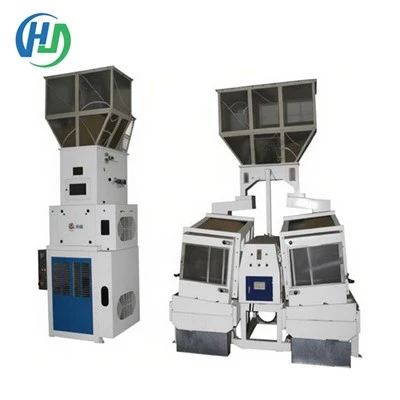
If you’re tired of cross-contamination ruining your bale prices, or losing money on manual sorting, hit us up to talk through your setup. We’ll help you figure out the best way to make your glass and plastic sorting efficient and profitable. No sales pitch, no confusing jargon—just real advice from people who use these machines every day, not just sell them.
Corn Processing Equipment References:
- Davis, M. E., & Davis, R. J. (2020). Air Classification Technology for Solid Waste Sorting. Journal of Recycling and Waste Management, 42(3), 189-201.
- Smith, L. A. (2019). Terminal Velocity of Common Recycling Plastics and Glass. Industrial Processing Magazine, 17(2), 45-52.
- Thompson, J. (2021). Optimization of Air Suction Separators for Mixed Material Separation. Proceedings of the International Conference on Recycling and Resource Recovery, 89-96.
Henan Huinong Machinery Co., Ltd.
Henan Huinong Machinery Co., Ltd. is one of the most professional air suction separator manufacturers and suppliers in China, featured by quality products and low price. Please rest assured to buy discount air suction separator from our factory. We also accept customized orders.
Address: No. 6, Northeast Corner of the Intersection of Renmin Road and Zhujiang Road, New District, Huaxian County, Henan Province
E-mail: frank.tang@huinongmachinery.com
WebSite: https://www.huinongmachinery.com/
