When I first started my company building customized AMR and AGV robots, most of our initial clients came from automotive manufacturing and warehouse logistics. That’s where the tech was most proven, right? Heavy parts, consistent workflows, well-defined environments—perfect for autonomous vehicles that move in straight lines or follow fixed paths. Then, three years ago, a small craft bakery reached out with a problem no off-the-shelf robot could solve: they needed to move 50-pound batches of raw sourdough starter from mixing stations to proofing rooms, then move finished loaves to packaging, all while working around open ingredient bins, humidity that warped metal frames, and strict food safety rules that banned any human contact with the bottom of load carriers. That was the moment I realized customized AMR/AGV robots weren’t just a “nice to have” for the food industry—they were a necessary solution to a lot of the pain points operators didn’t even know they could fix. Customized AMR/AGV Robot
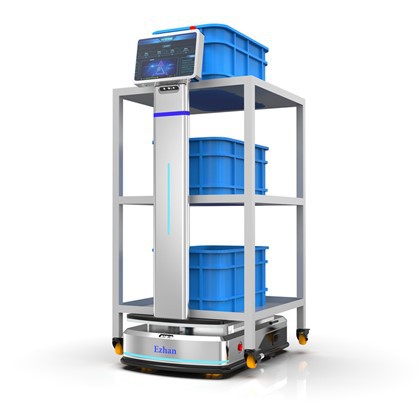
Let’s start with the big questions most food and beverage (F&B) operators ask when they hear “automated robots for production floors”: Is this even safe for food? Can it handle the messy, variable environments we work in? And will it actually make my bottom line better, not just add more costs? The short answer to all three is yes—but only if the robot is customized, not off-the-shelf. Off-the-shelf AMRs are built for sterile, flat, unchanging warehouse floors. But a food processing plant has coolers that drop to 34 degrees, fryers that blast 400-degree heat, floors sloped for drainage, and ingredients (flour, sugar, tomato paste) that get everywhere. Generic robots will break down fast, or trigger food safety audits because their crevices can’t be cleaned. When we built that sourdough robot, we swapped the usual aluminum frame for FDA-approved, powder-coated stainless steel with rounded edges that eliminate hidden corners where bacteria can grow. We added a load lifting mechanism that doesn’t drag on the floor, so it never picks up contaminants from concrete. We even calibrated its sensors to ignore fine flour dust, which would make a regular AMR’s LIDAR go haywire. That customization isn’t over-engineering—it’s compliance.
Food waste is the industry’s dirty little secret, right? The EPA says 30-40% of the food supply in the U.S. is wasted annually, and a lot of that comes from inefficient material movement. Think about it: a line worker walking 10 feet to grab a batch of dough might trip and spill it, or a cooler left open for 15 minutes because no one remembered to restock ingredients causes a whole shift’s product to spoil. Custom AMRs fix that by mapping workflows exactly to a facility’s layout, not a generic warehouse blueprint. For a snack food maker we worked with last year, their biggest waste came from misrouted pallets of pretzel dough, which would sit in the wrong staging area for 24 hours and go stale. We built a fleet of AMRs that are programmed to track each pallet’s expiry date, route it to the correct station within 10 minutes of being dropped, and even send an alert if a pallet stays in a zone longer than allowed. Six months after installing them, that snack maker cut pallet-related food waste by 22%. That’s not a sales pitch—that’s real numbers from a client that was tired of throwing away perfectly good product because of human error.
Labor costs are another massive headache for F&B operators. The Bureau of Labor Statistics says food processing has one of the highest turnover rates of any industry—recent numbers average around 30% annually, and that’s for entry-level material handling roles. When a worker quits, you’re not just hiring someone new; you’re training them, dealing with gaps in production, and often paying overtime to existing staff. Custom AMRs take over the repetitive, high-risk parts of material movement that no one wants to do: moving heavy loads between hot ovens and coolers, working night shifts when no one wants to be on the floor, navigating tight spaces around other machines. We had a poultry processing client who had 12 people dedicated to moving crates of chicken parts between processing lines, freezers, and packaging. Turnover in that role was 45% a year, and they were struggling to keep up with demand during peak grilling season. We designed a fleet of 8 AGVs that are sized exactly to fit their standard plastic crates, calibrated to stop instantly if they detect a human hand within 6 inches (a must for OSHA and food safety), and programmed to work 24/7 without breaks. Within a year, they cut that material handling labor by 70% and kept their line running 10 hours longer on peak days—no overtime, no missed shifts, no one getting injured lifting 80-pound crates all day.
But here’s the thing about customization: it doesn’t mean building something from scratch every time. It means working with a client to solve their specific problems, not forcing their facility to fit a robot. Last year, we worked with a small artisanal chocolate maker that only had 15,000 square feet of production space, with narrow aisles and delicate, temperature-sensitive products that can’t jostle. Off-the-shelf AMRs were too big for their aisles, and the standard load straps would crack the chocolate bars. We built 4 compact AMRs with rubber, non-abrasive load carriers, magnetic tape navigation (perfect for their small space, no LIDAR that can be thrown off by steam from their tempering room), and programmed them to move at 0.5 mph in high-traffic areas so they don’t bump into workers. They didn’t need a full warehouse overhaul—just a robot that fit their existing floor and their product. Three months after installation, their order fulfillment time dropped by 35% because their chocolates were moved directly from tempering to shipping, no more waiting around in the production floor.
Now, I know what some operators are thinking: automation is expensive, and for small to mid-sized F&B companies, it’s not worth the upfront cost. Let’s do the math. The average custom AMR for food material handling costs around $15,000 to $25,000, depending on the size and features. A full fleet for a medium processing plant might be $120,000, but the labor savings and waste reduction add up fast. The poultry client I mentioned earlier spent $180,000 on their fleet, but saved $220,000 a year in labor costs alone—they paid for the robots in 10 months. The snack food maker saved $95,000 a year in waste and overtime, paying back their $60,000 investment in 7.5 months. For small operators like the chocolate maker, even a single robot that does the work of two people pays for itself in under a year, especially when you factor in no recruitment or training costs.
There are also gaps that customized AMRs can fill that no other technology can. Take cleaning, for example. Food processing plants have strict daily and weekly cleaning schedules, and robots often get in the way during deep cleans. We designed our AMRs with removable, easy-to-clean parts that can be taken apart in 5 minutes, and programmed them to automatically move to a charging dock and storage area during cleaning hours, so they don’t block workers or get damaged by high-pressure hoses. For operators that work with raw meat, produce, or other high-risk ingredients, we can also add UV-C light sterilization to the load carriers, so every time a robot returns to the storage area, it sanitizes the surface before picking up the next load. That’s not a feature you get on a generic AMR, but it’s non-negotiable for food safety.
I’ll be honest: we’ve had clients that tried off-the-shelf robots first, and they failed. A frozen pizza maker we spoke to a year ago tried a cheap, pre-built AMR to move pizza bases from freezers to ovens. The robot couldn’t handle the -20 degree temperatures, the wheels got stuck on ice, and the sensors couldn’t tell the difference between a pizza base and a cardboard box. They scrapped it after two months. That’s why customization is so important for food—you can’t apply one-size-fits-all tech to an industry that has so many variables: temperature, moisture, product weight, floor layout, safety rules. Generic robots might work in a warehouse, but they’ll never work in a food processing plant.
The future of AMRs in food isn’t just about moving loads, either. We’re starting to work on robots that can track product traceability—something that’s become non-negotiable with new food safety laws that require every product to be traceable from farm to shelf. A customized AMR can be programmed to scan barcodes on every crate it moves, log its location in real time, and send that data to a client’s inventory management system. If there’s a recall, operators can pull every product that was moved in a specific time frame in 5 minutes, instead of spending 8 hours manually checking records. That’s not just efficiency—it’s protecting consumers and saving clients from massive liability costs.
At the end of the day, my team and I don’t sell robots. We solve problems. We’ve worked with every part of the food industry: craft bakeries, snack food makers, poultry processors, chocolate manufacturers, produce distributors. Every problem is different, so every robot is different. We don’t send a generic sales rep to a site that doesn’t know the difference between a mixing station and a packaging line—we send engineers who have worked in food processing, who know about FSMA rules, about flour dust, about how a 400-degree oven can warp metal. We test every robot in our lab for 30 days before it goes to a client, running it through simulations of their exact workflow, their exact floor, their exact products.
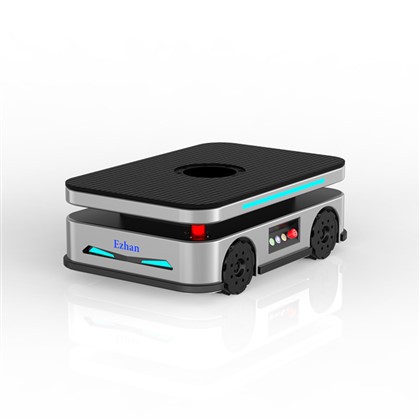
If you’re a food operator reading this, and you’re tired of throwing away food because of misrouted pallets, tired of turning down orders because you don’t have enough labor, tired of fighting turnover in material handling roles, let’s talk. You don’t have to overhaul your entire facility to automate your material movement. A customized AMR/AGV robot built for your specific needs can cut waste, reduce labor costs, and make your operations safer, all while working with your existing layout, not against it. Reach out to us, and we’ll come do an on-site assessment for free, no obligation, no sales pitch. We’ll show you how a robot built for your facility, your products, and your rules can make a real difference in your bottom line.
Robot Accessories References
U.S. Environmental Protection Agency. (2023). Food Loss and Waste in the United States.
U.S. Bureau of Labor Statistics. (2024). Labor Turnover Survey: Food Processing Sector.
Food and Drug Administration. (2022). FSMA Sanitation Transportation Requirements for Food Facilities.
Occupational Safety and Health Administration. (2023). Ergonomic Hazards in Material Handling Roles.
Shenzhen Ezhan Technology Co., Ltd.
We’re known as one of the most reliable customized AMR/AGV robot manufacturers and suppliers in China. With abundant experience, we warmly welcome you to buy bulk customized customized AMR/AGV robot from our factory. If you have any enquiry about cooperation, please feel free to email us.
Address: Room 1808, 1809, 1810, Building 2, Aipark, Baolong 4th Road, Longgang District, Shenzhen City
E-mail: sales01@ezhankeji.com
WebSite: https://www.ezhanrobot.com/
