Hey there, it’s Jake from [Baby Set Co.] – I know when you’re picking out stuff for your little one, safety’s probably the first thing on your mind, right? I get it, I’ve been there: my niece turned one last month, and I spent weeks obsessing over every tiny detail of the toys, the high chair, even the sippy cups. One question I get from so many other parents (and even other vendors, weirdly) is: “Are there actual safety standards for baby sets?” Baby Set

Let me cut through the noise here – yes, there are standards, but they’re not one-size-fits-all, and a lot of people don’t really get how they work. As someone who’s been selling baby sets for 7 years now, I’ve seen the good, the bad, and the straight-up sketchy stuff slip through the cracks. Today I wanna break this down like I would over a cup of coffee with a friend, no jargon, no fancy buzzwords.
First off, let’s start with the big ones: in the US, the main ones you’ll hear about are CPSC (Consumer Product Safety Commission) and ASTM F2090. Wait, what’s ASTM F2090? That’s the specific standard for baby gear that’s meant to be used from birth up to 24 months – so think your play yards, travel cribs, the combo playpen/activity sets a lot of us sell. CPSC is the government body that enforces all this, so if something’s on store shelves (or Amazon, for that matter) in the US, it’s supposed to meet their rules. But here’s the thing I learned early on: a lot of smaller brands cut corners to hit minimum standards, not best practices. That’s where we’ve always tried to stand out.
Let’s dive into what actually goes into these standards, because it’s not just “no sharp edges” (though that’s part of it). Take choking hazards, for example – that’s a huge one for baby sets, especially the ones with small detachable parts like teething rings, toy attachments, or even the clasps on a travel bag. CPSC has a “small parts test” where any part that fits into a 1.75-inch tube (standard test cylinder) can’t be sold for babies under 3 years old. But wait – a lot of “baby sets” are marketed for 0 to 24 months, so you might think those small parts are off the table, but some brands sneak them in anyway. Last year, we had a customer send back a set because a tiny Lego-style toy broke off – we immediately pulled that style from our lineup, because even if it technically fit the “minimum” size, we didn’t want to risk it.
Then there’s lead and phthalates. Ugh, those are the boogeymen of baby products. CPSC limits lead in paint and surface coatings to 90 parts per million (ppm), right? But what a lot of parents don’t know is that some cheaper baby sets use vinyl plastic that has hidden phthalates – those are chemicals that can mess with a baby’s hormone development. Wait, the standards for phthalates: CPSC bans 6 specific phthalates in children’s products, and that includes baby sets. But again, “banned” doesn’t mean the product is safe – it just means it doesn’t have those 6. Some brands use other phthalates that aren’t banned yet, which is why we test every single batch of our plastic sets with a third-party lab. It costs more, but honestly, I’d rather pay a little extra and sleep at night than have a parent worry about their kid chewing on a plastic toy that’s full of unregulated chemicals.
Another big one: stability. You’ve seen the viral videos, right? A baby tipping over a play yard, or a changing table that collapsed. ASTM F2090 has strict stability tests – they attach 50 pounds (that’s like a 4-year-old, yikes) to the side of a play yard and make sure it doesn’t tip. But here’s a loophole: some brands only test the base model of a play yard, not the ones with extra add-ons like toy bars or storage shelves. A couple years ago, we had a supplier try to sell us a line where adding the toy bar made the total weight on one side go above the limit – we turned them down flat. No way we’re putting a product on our shelves that could tip over if a baby climbs on it (which, let’s be real, they will).
Wait, what about international standards? A lot of our customers are in Canada, the EU, or even Australia, so I can’t just focus on US rules. The EU has EN 71, which is a whole set of standards for toy safety, including baby set parts, and it’s actually stricter on some things – like lead limits go down to 600 ppm, and they ban more phthalates than the US. In Australia, it’s AS/NZS 2172 for baby play equipment. The key here is: if you’re selling baby sets, you can’t just meet one standard – you need to meet the ones for every market you’re in. We have our sets third-party tested for every region we ship to, which is why a lot of boutique baby stores use us instead of big box brands.
Now, let’s get real about what happens when standards aren’t followed. I mentioned the sketchy stuff earlier – a few years back, a random brand sold a travel crib that didn’t meet ASTM F2090’s mesh strength requirement. The mesh ripped, and a baby fell out. CPSC recalled it, but by then, the damage was done. That’s why transparency is huge for us. We post our test reports on our website (no, really, go check – I even walk through how to read them, because most people don’t know what ppm means for lead) because I don’t want parents to have to guess if our sets are safe.
Wait, one thing a lot of people mix up: standards vs. certifications. A lot of brands will slap a “CPSC Certified” sticker on their product, but that just means it passed the test once. We go a step further – we do random, unannounced third-party tests on batches that come off the production line, not just the sample they send for certification. Because factories can cut corners on production, not just the sample. That’s the stuff that doesn’t make the news, but it’s the stuff that actually keeps babies safe.
I also wanna talk about the stuff that isn’t in the standards, but we prioritize anyway. For example, our play yards have rounded corners – ASTM doesn’t require that, but a sharp corner is just waiting for a baby to bump their head. We also use non-slip feet on all our stands – again, not a requirement, but if a set’s on a hardwood floor, we don’t want it sliding around while a toddler is crawling on it. The standards are a baseline, not a ceiling, and that’s how we’ve always looked at it.
Let me answer a question I get all the time: “What should I look for when buying a baby set?” First, check for the certification marks – but don’t just trust the sticker. Look for the actual test report number, or ask the supplier for it. Second, check the detachable parts: if any part is small enough to fit in that 1.75-inch tube, is it secured so a baby can’t pull it off? Third, avoid sets with loose strings or straps – those can be a strangulation hazard, even if they’re not technically banned in all standards. Fourth, if you’re buying a secondhand set, make sure it meets current standards – old sets (pre-2000, say) might not have the stability or lead limits we have now.
As a supplier, I know how easy it is to cut corners. When we first started, we had a quote from a factory that was 20% cheaper, but when we looked at their test reports, they only tested the lead in the paint, not the plastic. We turned that down, even though it would’ve meant a smaller profit margin. Because at the end of the day, my business isn’t just selling baby sets – it’s helping parents feel confident that when their kid is in that play yard, or chewing on that teething toy, they’re not taking a risk.
I’ve been doing this long enough to know that safety isn’t something you can put a price on. The standards are there, but they’re only as good as the way you implement them. A lot of brands see them as a box to check – we see them as a promise to every parent who buys from us.
If you’re a store owner, a parent looking for a bulk order, or even a fellow vendor who wants to chat about safety standards, hit me up. I’m always down to talk shop, answer questions, or even send you a sample test report. We work with small boutique stores and big online retailers alike, and we’re flexible for whatever you need. At the end of the day, we’re all here for the same thing: keeping babies safe.
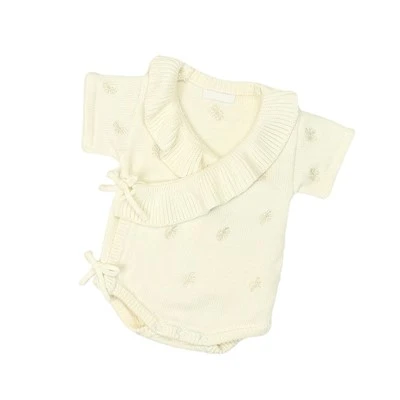
Oh, and one last thing – don’t just take my word for it. Do a little research, ask questions, and always prioritize transparency. If a supplier can’t show you their test reports, walk away. That’s the biggest red flag of all.
Baby Set References:
- U.S. Consumer Product Safety Commission. (n.d.). Baby & Toddler Product Safety Standards.
- ASTM International. (2022). Standard Specification for Baby Play Yards (F2090-22).
- European Committee for Standardization. (2021). EN 71-1: Safety of Toys – Part 1: Mechanical and Physical Properties.
- Australian Competition and Consumer Commission. (2020). AS/NZS 2172:2020 Play Equipment for Young Children.
Shanxi Field Clothing Corp
As one of the most professional baby set manufacturers and suppliers in China, we’re featured by quality products and low price. Please rest assured to wholesale bulk customized baby set from our factory. Also, quotation is available.
Address: 31F Tower B, Wanda Center, No. 175 North Jiefang Road, Taiyuan, Shanxi
E-mail: info@imfieldcashmere.com
WebSite: https://www.imfieldclothing.com/
