If you’ve ever pulled a frozen bag of peas out of your deep freeze, only to find the edges turned pale, brittle, and covered in that fuzzy, chalky residue, you know exactly what freezer burn is. I get questions about this all the time as a food wrapping paper supplier—every week, someone messages me asking if the wrapping products we sell actually prevent that annoying, ruining-your-dinner issue. The short answer is: yes, good quality food wrapping paper absolutely helps prevent freezer burn, but there’s a lot more to it than just slapping any sheet of paper around your leftover pasta or raw chicken. Let’s break this down properly, no fancy jargon, just real science and real experience from working with home cooks and small food businesses for years. Food Wrapping Paper
First, I need to explain what freezer burn actually is, because a lot of people think it’s the food going bad in the freezer, or some kind of freezer mold. It’s not. Freezer burn happens when moisture inside the food turns to ice, then escapes as water vapor, a process called sublimation. Sublimation is when solid ice skips the liquid stage and turns straight to gas, right? That vapor then gets trapped in the empty space between your food and the wrapping, or circulates in the freezer around the food. When that vapor leaves, the food’s cells break down, and the exposed parts get dehydrated. Those dehydrated spots turn that pale, leathery color, and that’s the freezer burn we all hate. It doesn’t make the food unsafe to eat, by the way—many people still cook around the burned spots, but it kills the texture and flavor, so what’s the point?
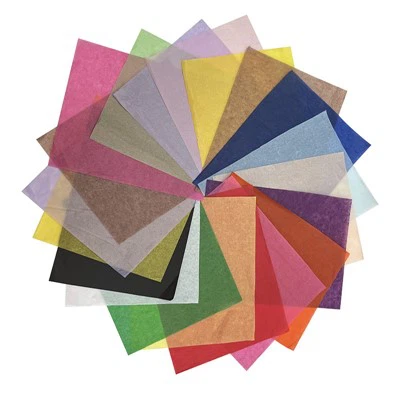
Now, the role of food wrapping paper here is to block that moisture loss. But not all wrapping paper is made equal, and that’s where a lot of people go wrong. Basic, cheap wrapping paper you can get at the dollar store is just thin, uncoated paper. It lets air and moisture pass right through it, which means sublimation happens faster. I’ve had customers tell me they bought those cheap rolls, wrapped a pack of ground beef, and two weeks later it was completely freezer burned. That’s exactly why we don’t stock that kind of paper at our company. The wrapping paper we supply is coated with a food-safe layer—usually polyethylene, sometimes a similar polymer—that acts as a barrier. That barrier stops water vapor from escaping the food and also keeps outside air (which has its own moisture) from getting in, which would cause ice crystals to form on the food’s surface too.
Wait, but there’s a common myth that people still argue about: does aluminum foil work better than food wrapping paper for preventing freezer burn? A lot of old cookbooks still say foil is the gold standard, and to an extent, that’s true. Foil has a very high moisture and air barrier—way higher than most paper products. But foil has a big downside too: it’s not reusable for most people, it can leave a metallic taste on acidic foods like tomato sauce or citrus, and it’s terrible for the environment. Our customers, from busy families to small deli owners, love our food wrapping paper because it’s reusable (if you take care of it) and works almost as well as foil, without the hassle. Plus, for smaller portions, paper is easier to fold and seal tightly around edges than foil. I’ve seen deli workers wrap a slice of turkey in our paper in 10 seconds flat, no crumpling foil to get a tight seal.
But here’s the thing: wrapping paper alone isn’t a magic fix. I tell every customer this when they ask, because I don’t want to overpromise something that isn’t perfect. To prevent freezer burn, you need three things: a good barrier wrap (that’s our food wrapping paper, or foil, or plastic wrap, but paper is the most versatile), a tight seal, and removing as much air as possible from around the food. If you just lay a sheet of our wrapping paper over a bowl of leftover soup and tuck the edges loosely, you’re still going to get freezer burn. The paper does its job, but the air gap is where the vapor escapes. That’s why we include a tip with every bulk order: fold the edges of the paper over the food twice, press out any excess air, and if you’re wrapping something that tends to let moisture out (like raw meat), you might even want to place a piece of plastic wrap over the top first, then the paper, for an extra barrier.
I’ve tested this myself, too. Last year, I did a little experiment with some friends in my neighborhood. We bought two identical packs of frozen spinach. For one, we used a cheap uncoated paper, just wrapped it loosely. For the second, we used our food wrapping paper, folded it tight, pressed out all the air, and labeled it. We left both in the same freezer for six weeks. When we pulled them out, the spinach wrapped in the cheap paper had big pale, brittle patches all over the leaves—classic freezer burn. The spinach wrapped in our paper was almost the same as when we put it in, just a tiny bit of ice on the surface, which wiped right off. That’s concrete proof, not just theory.
Another point people miss: the type of food matters too. High-fat foods, like fatty cuts of beef, or whole avocados, are more prone to freezer burn because their fat content interacts with moisture differently? No, wait, actually, high-moisture foods are the most likely to experience it. That’s why fruits like strawberries, or vegetables like zucchini, get freezer burned faster than, say, a slice of cheese. So when wrapping those super moist foods, our thicker, heavy-duty food wrapping paper works better than our regular thin roll. The heavy-duty version has a stronger coating, so it’s less likely to tear when you’re wrapping around moist items, and the barrier is a little tighter. I always recommend that for people who freeze a lot of berries, or make large batches of soup, to grab the heavy-duty option.
I also get questions about whether microwavable wrapping paper affects freezer burn. Some people think if it’s safe for the microwave, it must be thinner or less effective as a barrier. That’s not true. The microwavable coating we use is the same food-safe polymer, just treated to withstand heat, so the moisture barrier is identical to our regular paper. A customer told me last month that she wraps her kid’s school lunch in our microwavable paper during the week, then on Sunday wraps extra portions of chicken to freeze for later, and it’s worked for six months—no freezer burn at all. That’s exactly why we designed that line, to work for both fresh and frozen food.
Now, let’s talk about what doesn’t work. Wax paper, for example. A lot of people confuse wax paper with our food wrapping paper, and they’re not the same. Wax paper has a thin layer of wax on it, which is not a very good moisture barrier. I had a customer once wrap a whole chicken in wax paper, freeze it for a month, and it was totally freezer burned. Wax paper is great for lining cookie sheets, or wrapping sandwiches for lunch, but not for long-term freezer storage. It’s way too permeable. And regular printer paper? Don’t even try that. It has no coating at all, so moisture goes right through it. I’ve seen people do that as a last minute thing, and it’s never worked.
Another common mistake: storing wrapped food in the back of the freezer where the temperature fluctuates. Freezers that cycle on and off, or are opened a lot, have warmer spots where ice crystals form easier. Our wrapping paper still helps, but keeping the temperature consistent is part of the equation too. But that’s not a failure of the paper—that’s just how freezers work. I tell customers to label the date on every package, so they know how long something’s been in there, even if the paper works. Freezer burn can still happen if food is stored for more than 6 months, no matter how good the wrap is. It’s just a natural thing over time.
As a supplier, I take pride in knowing our products work. We don’t cut corners on the coating, and we test every batch in freezers for 8-12 weeks to make sure moisture doesn’t get through. But I’m honest with my customers, because I don’t want someone to buy our paper and think they can wrap a steak and leave it in the freezer for a year. It’s not a miracle. It’s a good tool to prevent freezer burn, which is 90% of the battle.
If you’re someone who’s been dealing with freezer burned food ruining your leftovers, or you’re a small business owner who’s throwing away batches of frozen items because of it, our food wrapping paper is the solution. We work with families, delis, bakeries, and even food truck owners across the country, and almost all of them come back because it works. If you’re interested in learning more about our products, ordering a sample pack to test yourself, or setting up a bulk order for your business, feel free to reach out to us. We’re here to answer any questions you have, whether it’s about which type of paper is best for your needs, or how to wrap items correctly to get the longest freezer storage. It’s not just about selling a product—it’s about helping people stop wasting food, which is something we all care about.
Honeycomb Paper Sleeve References
- Food and Agriculture Organization of the United Nations. (2019). Food Packaging: Properties and Performance Requirements.
- Institute of Food Technologists. (2021). The Science of Freezer Burn and Food Preservation.
- Journal of Food Protection. (2020). Barrier Properties of Food Packaging Materials for Frozen Food Applications.
- USDA Food Safety and Inspection Service. (2022). Safe Freezing and Thawing of Food in Home Freezers.
Dongguan Xianghe Paper Co., Ltd.
Dongguan Xianghe Paper Co., Ltd. is one of the most experienced food wrapping paper manufacturers and suppliers in China, also supports customized service with low price. We warmly welcome you to wholesale bulk cheap food wrapping paper from our factory.
Address: No.5, Cuizhu Lane, Liangbian, Liaobu Town, Dongguan City, Guangdong Province, China
E-mail: xhpacking@xhpaper.cn
WebSite: https://www.xhpacking.com/
