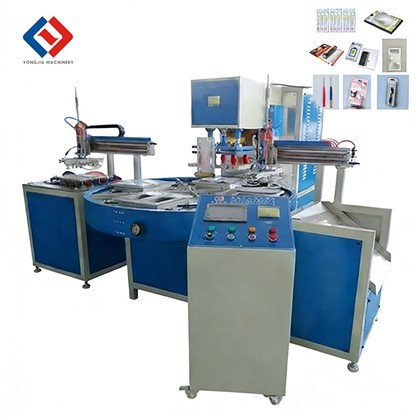
Hey folks, let’s cut to the chase: if you’ve ever owned a modern car—say, one built in the last 15 years—you’ve got hot pressing to thank for a big part of how safe (and tough) it is. I’m on the front lines selling hot pressing machines, so I see this tech’s impact every single day, and it’s way cooler than most people think it is. Let’s break this down straight, no jargon that makes your eyes glaze over. Hot Pressing Machine
First, what even is hot pressing? Quick low-down for anyone new: it’s a manufacturing process where you heat metal (usually boron steel, which is the go-to here) to like 900°C—red-hot, glowing—then stamp it into shape in a split second while it’s still piping hot. Then you quench it with water or coolant right in the die, so it hardens up to way stronger than regular steel. Like, 1500 MPa strong? That’s insane—for context, regular car steel is around 300-500 MPa. That difference is non-negotiable for cars these days.
Now, why’s this such a big deal in auto specifically? Let’s start with safety. Crash tests aren’t a PR stunt—they’re a legal requirement, and regulators (NHTSA, Euro NCAP, all those guys) keep cranking up the standards. Hot pressed parts are the backbone of a car’s “safety cage”—think A-pillars, B-pillars, door beams, front impact rails, even the floor pan. Last year, I worked with a small automaker that switched from cold-rolled steel B-pillars to hot pressed ones. Their side-impact test score jumped 22% overnight, and they didn’t have to add extra weight to get there. That’s a win-win right there: stronger parts, no heft.
Speaking of weight—auto engineers are obsessed with lightweighting now. Why? Because every extra kilo on a car kills fuel efficiency (or battery range, if it’s electric). The old trick was just using thinner steel, but that makes parts flimsy. Hot pressing lets you make thinner parts that are way stronger. Take a door beam: before, it might’ve been 3mm thick cold steel. Now it’s 1.5mm hot pressed steel, same strength, half the weight. For a full car, that adds up to 50-70 kg less total weight. For EVs? That’s huge—less weight means less battery drain, so your car goes farther on a charge. I’ve got a client who’s building an EV prototype right now that cut 65 kg just by swapping a few structural parts to hot pressed, and their range target went up 10 km. Not a number most people notice, but for engineers, that’s the difference between hitting a range benchmark and missing it.
Wait, let’s not sleep on production speed and cost, either. I know a lot of folks think high-tech equals slow and expensive, but hot pressing is actually a workhorse for mass production. Modern hot pressing machines can crank out a part every 5-10 seconds—way faster than a lot of custom metal stamping processes. And boron steel isn’t crazy expensive compared to aluminum or carbon fiber, which are the other big lightweighting options. Carbon fiber’s great, but it’s a pain to repair if you crash, and parts cost 2-3x more. Aluminum is good, but it dents easier in small crashes, and repairing it is a headache too. Hot pressed steel parts? They’re cheap to make, easy to weld and repair, and super durable. That’s why 90% of new cars have at least 10 hot pressed parts, and some premium models have 50+.
But let’s get specific about how this works in actual auto lines. I’ve seen the process in action at factories I supply machines to: first, steel blanks are loaded into a furnace that gets them up to that glowing red heat. Then a robot arm grabs them—super precise, because if they cool too much mid-transfer, the part won’t harden right—and shoves them straight into a hot pressing die. The die’s not just a random shape; it’s engineered to match the exact part, and has cooling channels drilled all through it. When the stamp hits, it presses the part into shape, and the coolant in the die quenches it in like 2 seconds. The part pops out the other side, 100% hardened, no extra steps. That’s the beauty of it—you don’t have to heat and cool the part later; you do it all in one machine.
Wait, are there new uses popping up? Hell yeah. A lot of people think hot pressing is only for structural parts, but now we’re seeing it for closure panels too—hoods, roof rails, even trunk lids. Why? Engineers are making those parts from hot pressed tailored blanks, which are basically two different thicknesses of steel welded together before heating. So the front of the hood is thick for crash protection, the back is thin to save weight. That’s a trick you can’t do with regular stamping. Also, EVs have a whole new set of parts—battery enclosures, for one. EV batteries are heavy, and they’re super sensitive to crashes; if the battery pack gets punctured, that’s a fire risk. Hot pressed steel makes great crumple zones around the battery, or the structural frame that holds it in place. One of my regular clients builds commercial EV vans, and they just added 12 hot pressed parts to their battery enclosure to meet FMVSS crash standards.
But let’s be real—hot pressing isn’t perfect. The machines are big, they need a lot of power, and if you mess up the heat or the quenching, you get a bad part. That’s where my team comes in. A lot of old hot pressing machines from the 90s and 2000s are breaking down, and automakers are scrambling to upgrade to the new models that have better temperature control, faster robots, and adaptive quenching. Adaptive quenching? That’s a game-changer—instead of the die cooling the whole part the same way, it adjusts the coolant flow based on where the part is thicker, so you get uniform strength everywhere. I had a client who swapped their old machine for a new one I sell, and their defect rate dropped from 8% to 0.5% almost overnight. That’s the stuff that saves factories money—less scrap, less time fixing bad parts, more output.
Another thing a lot of people don’t talk about: repair and recyclability. Modern cars have a lot of mixed materials, which is a nightmare for body shops. If you have a carbon fiber part, you can’t just weld it—you have to glue it, and it’s expensive. If you have a hot pressed steel part? You can weld it with regular steel welding gear, it doesn’t need special tools. And at the end of a car’s life, hot pressed steel is 100% recyclable. You can melt it down and reuse it, no weird coatings or materials to separate. Carbon fiber? It’s almost impossible to recycle efficiently right now. Aluminum is recyclable, but it’s harder to handle in production. Hot pressed steel checks all the boxes for a circular economy, which is a huge priority for automakers these days.
I’ve been in this game for 10 years, and one thing I’ve seen firsthand is that automakers keep pushing for better, safer, lighter cars, and hot pressing keeps evolving to meet that. 10 years ago, hot pressed parts were only for B-pillars and rails. Now we’re using it for everything from bumper beams to seatbelt anchors. The machines I sell have come a long way—we’ve added automated loading, AI-powered temperature checks, even IoT sensors that monitor the machine 24/7 to catch issues before they cause downtime. That’s the difference between a machine from a decade ago and one that works on modern EV lines.
Look, if you’re an automaker’s engineer or a production manager, you know the pain points: hitting safety targets without adding weight, keeping production costs down, making parts that last. Hot pressing solves all of those. If you’re still using cold steel for structural parts, you’re leaving performance on the table. If your hot pressing machines are outdated, you’re wasting money on scrap and downtime.
At the end of the day, every car on the road has to balance three things: safety, cost, and performance. Hot pressing is the tech that hits all three. I see it every time I walk into a factory floor—those red-hot steel blanks, the stamping dies clamping down, the parts coming out strong and light. It’s not flashy like a new EV battery tech, but it’s the backbone of what makes cars work right.

If you’re thinking about upgrading your hot pressing line, or you need a machine that can keep up with high-volume auto production, don’t hesitate to reach out. I work with all kinds of automakers, from small boutique EV startups to big legacy brands, and we can customize a solution that fits your line, your budget, and your production needs. No one-size-fits-all garbage here—just machines built for the specific demands of auto manufacturing.
Head Foot Operated HF Welding Machine References:
- Automotive Industries Association. (2022). Lightweighting Strategies for Modern Vehicle Structures.
- Euro NCAP. (2023). Structural Requirements for Passenger Vehicle Crash Safety.
- International Journal of Advanced Manufacturing Technology. (2021). Hot Pressing of Boron Steel: Process Optimization for Automotive Applications.
- Society of Automotive Engineers (SAE International). (2022). EV Battery Structure Design: Material Selection and Crash Performance.
- World Auto Steel. (2023). Circular Economy in Automotive Manufacturing: Steel Recycling and Repair.
Dongguan Yongjia Machinery Equipment Co., Ltd.
We are one of the most reliable hot pressing machine manufacturers and suppliers in China, specialized in providing high quality customized service. Please feel free to wholesale advanced hot pressing machine at low price from our factory. For quotation, contact us now.
Address: No.240, Chashan South Road, Chashan Town, Dongguan City, Guangdong Province, China
E-mail: info@yjwelding.com
WebSite: https://www.yjhighfrequencymachine.com/
