Hey there! I’m a supplier of Collaborative Welding Robots, and today I wanna chat about the safety standards for these awesome machines. Collaborative Welding Robot

First off, let’s understand why safety standards are so crucial. Collaborative welding robots work side – by – side with human workers. That means we gotta make sure they don’t pose any risks to the people around them. These robots are used in all sorts of industrial settings, and any safety mishap can lead to serious injuries or even loss of life.
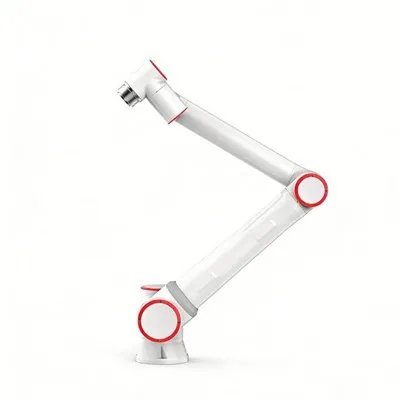
One of the primary safety standards is related to the robot’s physical design. The robot should have smooth surfaces without any sharp edges. Sharp edges can cause cuts and abrasions to the workers. For example, if a worker accidentally brushes against the robot during its operation, a sharp edge could easily break the skin. So, we make sure our robots are designed with rounded corners and smooth finishes.
Another important aspect is the force and speed limitations. Collaborative robots are designed to work in close proximity to humans, so they can’t move too fast or apply excessive force. There are specific standards that define the maximum force and speed a collaborative welding robot can operate at. For instance, if a robot is moving too fast, it might not be able to stop in time if it comes into contact with a human. And excessive force can cause serious harm. We test our robots rigorously to ensure they meet these force and speed requirements.
Sensors play a huge role in the safety of collaborative welding robots. These robots are equipped with various sensors, such as proximity sensors, force sensors, and vision sensors. Proximity sensors detect when a human is getting too close to the robot. Once the sensor detects a human in the vicinity, the robot can slow down or stop its operation. Force sensors are used to detect any unexpected contact. If the robot senses that it’s applying too much force on an object or a human, it will immediately stop. Vision sensors can help the robot identify obstacles and humans in its path, allowing it to adjust its movements accordingly.
Emergency stop buttons are also a must – have safety feature. These buttons should be easily accessible and clearly marked. In case of an emergency, a worker can quickly press the emergency stop button to halt the robot’s operation. We make sure that our robots have multiple emergency stop buttons placed in strategic locations around the work area.
Risk assessment is another key part of safety standards. Before a collaborative welding robot is deployed in a workplace, a thorough risk assessment should be carried out. This involves identifying all the potential hazards associated with the robot’s operation, such as electrical hazards, mechanical hazards, and welding – specific hazards like fumes and radiation. Based on the risk assessment, appropriate safety measures can be put in place. For example, if there are high levels of welding fumes, proper ventilation systems should be installed.
Training is also essential for ensuring the safety of collaborative welding robots. Workers who will be working with the robots need to be properly trained on how to operate them safely. They should know how to use the robot’s controls, how to handle emergencies, and how to perform basic maintenance. We provide comprehensive training programs for our customers to make sure their workers are well – equipped to work with our robots.
Let’s talk about the safety standards for the welding process itself. Welding involves high temperatures, sparks, and fumes. The robot should be designed to minimize the risk of fire and explosion. For example, it should have proper insulation to prevent electrical short – circuits, which could potentially lead to a fire. The welding area should also be well – ventilated to remove the harmful fumes generated during the welding process.
In addition, the robot should be able to handle different types of welding materials safely. Different materials have different properties, and the robot needs to be programmed to adjust its welding parameters accordingly. For example, welding aluminum requires different settings than welding steel.
Now, let’s touch on the software safety standards. The software that controls the collaborative welding robot should be reliable and secure. It should be able to prevent unauthorized access and ensure that the robot operates as intended. Regular software updates are also important to fix any security vulnerabilities and improve the robot’s performance.
We also need to consider the safety of the robot’s end – effector. The end – effector is the part of the robot that actually performs the welding. It should be designed to be stable and secure. For example, if the end – effector is not properly attached, it could fall off during operation and cause injury.
Another aspect is the safety of the power supply. The robot should be connected to a stable power source, and there should be proper protection against electrical surges and short – circuits. Electrical hazards can be extremely dangerous, so we take all the necessary precautions to ensure the safety of the power supply.
When it comes to compliance, our collaborative welding robots are designed to meet all the relevant international safety standards. We stay up – to – date with the latest regulations and make sure our products are always in line with them. This gives our customers peace of mind knowing that they are using a safe and reliable product.
If you’re in the market for a collaborative welding robot, you need to make sure you choose a supplier who takes safety seriously. At our company, we’ve put a lot of effort into ensuring that our robots meet the highest safety standards. We believe that safety is not just a feature, but a fundamental part of our product.
If you’re interested in learning more about our collaborative welding robots or have any questions about safety standards, don’t hesitate to reach out. We’re always happy to have a chat and discuss how our robots can meet your specific needs. Whether you’re a small – scale workshop or a large – scale manufacturing plant, we’ve got the right solution for you.
Collaborative Palletizing Robot References:
- ISO standards related to industrial robots and welding safety
- National Institute for Occupational Safety and Health (NIOSH) guidelines on welding safety
- Industry best practices for collaborative robot safety
Xinweilai Intelligent Technology (Shandong) Co., Ltd.
As one of the most professional collaborative welding robot manufacturers and suppliers in China, we’re featured by quality products and good service. Please rest assured to wholesale bulk customized collaborative welding robot from our factory. For pricelist and quotation, contact us now.
Address: Jinghua Road, Economic and Technical Development Zone, Dezhou City, Shandong Province
E-mail: liujiqing@xinweilaiznkj.com
WebSite: https://www.xinweilaiznkj.com/
