When I first started working in the wood-plastic extrusion industry over 12 years ago, I thought the extruder was just a big machine that pushed raw materials through a die. Back then, I’d stand on the factory floor watching ours hum along, feeding PVC and wood fiber into its hopper, and I’d realize I was barely scratching the surface of what it actually does. For anyone looking at a PVC/WPC (Wood Plastic Composite) profile production line, the extruder is the unsung hero that turns powder and fiber into the finished door frames, deck boards, window trim, or fencing you see on homes and job sites every day. As a supplier of full PVC/WPC extrusion lines, I get asked all the time: “What makes the extruder so critical in this process?” Let me break it down, not as some textbook definition, but from the perspective of someone who’s spent years building these lines and troubleshooting every kind of issue that comes with extruding PVC and wood-plastic materials. PVC/WPC Profile/wood-plastic Extrusion Production Line
First, let’s get one thing straight: PVC/WPC profiles aren’t like plain plastic parts or natural wood. They’re a blend of rigid PVC resin, wood flour (usually from sawdust or wood waste), stabilizers, lubricants, pigments, and sometimes impact modifiers. Getting that blend right is step one, but the extruder is where that mixture stops being a pile of separate powders and becomes a homogenous, meltable mass ready to be shaped. Think of the extruder as a giant, precision mixer, heater, and pump all rolled into one. It doesn’t just heat up the PVC to make it flow—it has to distribute the wood flour evenly throughout the PVC matrix, avoid burning the wood (which would ruin the profile’s color and strength), and keep the material at a consistent temperature so every part of the final profile is the same.
Let’s talk about the design of the extruder itself, because that’s where the magic happens. Most PVC/WPC lines use a single-screw extruder, though twin-screw models are growing in popularity for larger or more complex blends. I’ve seen both work great, but I always tell new customers that twin-screw extruders are a game-changer for WPC because their two intermeshing screws create better shear and mixing than a single screw. Shear, by the way, is just the friction between the screw and the barrel that generates heat, not just the external heaters on the extruder. For PVC, you have to be careful here—too much shear and you’ll degrade the PVC, breaking its molecular chains and making the profile brittle. For WPC, you have to balance that shear so you don’t burn the wood flour, which would turn your nice natural-grain profile grey and crumbly. That’s why when we build our lines, we work with engineers to calibrate the screw design and heater zones exactly for PVC/WPC blends, not just generic plastic.
The feeding stage is another thing the extruder controls, and it’s more important than most people realize. You can have the best raw materials in the world, but if the extruder is feeding them unevenly, you’ll get inconsistent profiles. Our lines use gravimetric feeders that meter each component—PVC resin, wood flour, additives—by weight, not volume. That means every single batch is exactly the same ratio. For example, a deck board might be 60% PVC, 30% wood flour, 8% additives, 2% pigment, and if the extruder feeds 5% too much wood one day, that board will be weaker and more likely to warp in the sun. I’ve had customers call me panicking because their profiles are streaky or have soft spots, and 9 times out of 10, it’s a feeding issue in the extruder. Fix that, and their production quality jumps overnight.
Next, the melting zone. Once the raw materials are fed into the extruder hopper, they move down the screw through different temperature zones. The first zone is cool, to prevent the powder from bridging in the hopper (that’s when the powder packs together and won’t feed down the screw). Then each subsequent zone heats up gradually, until the PVC reaches its gelation temperature—around 160-180°C for most PVC blends. For WPC, we keep that melting temperature a few degrees lower to protect the wood flour, which starts to degrade around 200°C. The extruder’s barrel heaters and screw design work together here to make sure every particle of PVC is melted, but the wood stays intact. I remember a few years ago, a customer of mine bought a cheap extruder from a supplier who didn’t account for WPC’s lower heat tolerance. They were running their line at too high a temperature, and their profiles had a burnt smell and cracked after a few months of outdoor use. We had to come out and adjust the extruder’s temperature controls and replace their old screw with one designed for WPC, and they’ve been reliable ever since.
The most underrated job the extruder does, though, is mixing and homogenization. Wood flour is a solid, and PVC is a plastic, so getting them to bond evenly is key to the final profile’s strength, durability, and look. If the wood clumps together in the blend, you’ll get a profile with weak spots where the wood didn’t distribute evenly. The twin-screw extruders we supply use the overlapping of the two screws to knead the mixture, breaking up wood clumps and making sure every part of the blend has the same amount of PVC and wood. That’s why our WPC profiles have consistent structural integrity—you can nail through them, cut them, and they don’t split like natural wood, and they don’t warp like plain PVC because the wood gives them stability. I always test this when I visit a customer’s line: I take a piece of their profile and break it, and if I see big chunks of wood, that means the extruder isn’t mixing enough. Fix the extruder’s screw speed and temperature, and the break will be clean, with wood evenly spread throughout.
Then there’s the pressure control, which is critical for the die at the end of the extruder. The die is what gives the profile its final shape—like a 10-foot long door frame or a 12-foot deck board. If the extruder isn’t maintaining constant pressure, the material coming out of the die will be inconsistent, too thick in some places and too thin in others. The extruder’s screw speed and a pressure sensor at the end of the barrel work together to keep pressure steady. For PVC/WPC, pressure has to be just right: too low and the profile will have bubbles or voids, too high and the die will wear out too fast, leading to maintenance costs down the line. Our lines have automatic pressure control that adjusts the screw speed in real time if pressure drops or rises, so the operator doesn’t have to babysit it. That’s one of the biggest time-savers for production managers—they can run the line for hours without having to tweak settings, which cuts down on downtime and waste.
Wait, let’s not forget about efficiency and waste. The extruder is the heart of the production line when it comes to material waste too. If the extruder is misaligned, or if the temperature zones are off, you’ll get scrap profiles that have to be ground up and re-fed back into the line, or thrown away entirely. For a production line running 24/7, even a 5% waste rate adds up to thousands of dollars a month in lost materials. We design our extruders to be energy-efficient too—they use less power per kg of output than older, generic extruders, which keeps operating costs low for our customers. I had a customer last year who switched from a 10-year-old single-screw extruder to one of our twin-screw WPC lines. They told me their electricity bill for extrusion dropped by 22%, and their scrap rate went from 8% to less than 2%. That’s the kind of impact getting the extruder right has on a business’s bottom line, not just on product quality.
I also want to mention common mistakes new producers make when choosing an extruder. A lot of people look only at the price, and end up with an extruder that’s not designed for PVC/WPC specifically. Generic plastic extruders don’t have the right temperature controls, screw design, or mixing capability for blends with high wood content. I’ve seen customers buy an extruder that works for plain PVC, then try to run WPC and end up with nothing but bad profiles and wasted material. That’s why as a supplier, we don’t just sell extruders—we work with customers to match the extruder size and design to their specific product: whether they’re making thin window trim (which needs precise pressure control) or thick deck boards (which need high mixing for strength).
At the end of the day, when a finished PVC/WPC profile rolls off the line and goes to a job site, most people don’t think about the extruder. They just see a durable, weather-resistant door frame or deck board that lasts for decades. But every step of that profile’s journey starts in the extruder: the raw material blend, the even mixing, the consistent temperature, the steady pressure. As someone who builds these lines, I take pride in making sure that extruder isn’t just a machine—it’s the core that makes our customers’ products stand out.

If you’re in the market for a PVC/WPC profile production line, or if you’re looking to upgrade your current extruder to improve quality and cut costs, we can help. We work with producers of all sizes, from small operations just starting out to large manufacturers running multiple lines 24/7, to design custom extruders and full production lines that fit their specific needs. We don’t just sell equipment—we provide support, too, from installation to training our team to help your operators get the most out of your line. Don’t let a bad extruder hold your production back; let’s talk about how we can build or upgrade your line to make better profiles, with less waste and lower operating costs.
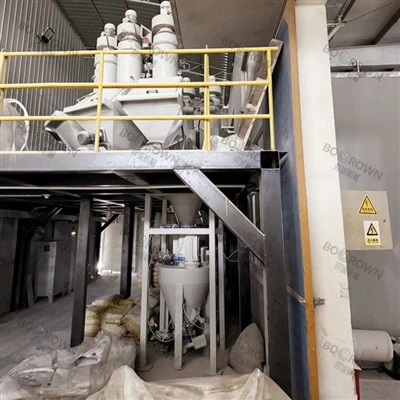
PE Centralized Feeding System References:
- Crawford, R. J. (2002). Plastics Engineering. Butterworth-Heinemann.
- Harper, C. A. (2002). Handbook of Plastics, Elastomers, and Composites. McGraw-Hill.
- Klyosov, A. A. (2007). Wood-Plastic Composites. John Wiley & Sons.
- Tadmor, Z., & Gogos, C. G. (2006). Principles of Polymer Processing. John Wiley & Sons.
- Whelan, A., & Potter, P. (1992). PVC Technology. Springer.
ZJG BC Machinery Co., Ltd.
As one of the most professional pvc/wpc profile/wood-plastic extrusion production line manufacturers and suppliers in China, we’re featured by quality products and good price. Please rest assured to buy cost-efficient pvc/wpc profile/wood-plastic extrusion production line for sale here from our factory. Contact us for custom service and OEM service.
Address: No.8 Lexi Road, Leyu Town, Zhangjiagang City
E-mail: sales@bcextruder.com
WebSite: https://www.bcextruder.com/
