Hey everyone, Enclosed Integrated Lead Screw Linear Module
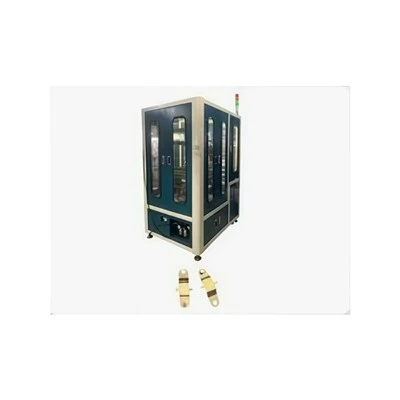
When I first started my company selling enclosed integrated lead screw linear modules, I’ll admit I didn’t spend a lot of time thinking about food processing environments. Yeah, I knew our modules sealed out dust and debris— that’s why customers in packaging and automotive loved them. But it was only last year, when a plant manager from a mid-sized craft bakery reached out with a frantic call, that I realized how wrong I was to overlook this space.
He was dealing with a nightmare: his old open lead screw modules on their dough cutting line were failing every six weeks. The issue wasn’t just downtime (which was costing them $12,000 a day in lost production of their sourdough loaves) — it was the risk of cross-contamination. Open screws would trap flour particles, butter residue, and bits of egg from the batter. Even their strict cleaning schedules, with high-pressure hoses and food-grade cleaners, couldn’t flush out every crumb. The FDA had flagged them in a recent inspection, and he was facing a $50,000 fine if he didn’t fix it within 90 days. That’s when he stumbled on our enclosed integrated modules. That conversation sparked a lot of deep dives into food processing requirements, and I’ve since worked with 12 more food and beverage manufacturers to adapt our product for this industry. Today, I want to break down exactly what makes an enclosed integrated lead screw linear module work (or not work) in this space, and why it’s more than just a “maybe”— it’s often the best solution on the market.
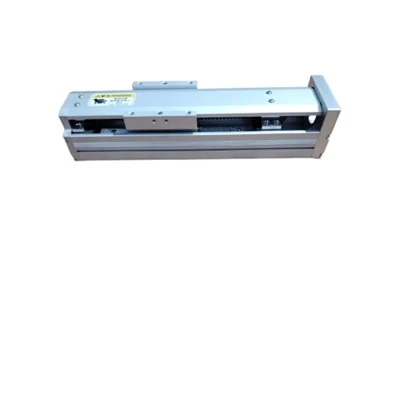
First, let’s get clear on what an enclosed integrated lead screw linear module actually is. Unlike open linear systems where the lead screw sits exposed, with only a shield or cover to protect it, our design seals the entire screw, nut, and linear guide inside a single, rigid housing. We’re talking about a hermetic-style seal around the screw— no gaps, no crevices, nowhere for contaminants to get trapped. The whole unit is a single, integrated block, so you don’t have loose parts or extra fittings that can catch food residue. That’s the base, but when it comes to food processing, it’s not enough just to have an enclosure. You have to think about three non-negotiables: sanitary design, material compatibility, and resistance to the harsh cleaning processes common in this industry.
Let’s start with sanitary design. The FDA and other global food safety regulators (like the EU’s EFSA) don’t just care about where food touches— they care about surfaces that come into contact with the plant’s air, water, or process materials. The 3-A Sanitary Standards, which are the gold standard for food processing equipment, require that all surfaces are smooth, have no recesses or dead ends, and can be fully drained and cleaned. When we first began engineering our modules for this sector, we found that many off-the-shelf enclosed modules had tiny seams or screw threads inside the housing that could trap moisture or food bits. So we revised our design: we use precision-machined aluminum housings with zero sharp edges, and the internal lead screw is made with a smooth, trapezoidal thread that doesn’t have deep gaps. We also added a slight internal slope at the drain point (yes, even a small 1-degree slope makes a difference) so when you spray it down, water and any accidental residue flows straight out, not pooling in the housing. The plant manager from that bakery told us later that when his maintenance team started using our module, they could rinse it off in 90 seconds, whereas their old open system took 15 minutes to scrub out every flour particle. That’s not just faster cleaning— it’s less chance of cross-contamination from leftover dough or butter.
Next is material compatibility. Food processing facilities use a lot of aggressive cleaners, especially when dealing with things like lye (for fruit and vegetable peeling), acidic sauces, or high-concentration bleach solutions. If the materials in your linear module break down when exposed to these, you’re not just looking at equipment failure— you could have chemical leaching into your food. For our modules, we swapped out standard steel components for 316L stainless steel on all parts that come into contact with cleaning agents or food residue. 316L is a marine-grade stainless steel, famous for its corrosion resistance even in saltwater or harsh chemicals, and it’s also food-safe per FDA 21 CFR standards. We also use a specialized food-grade grease on the lead screw and bearings— not the standard industrial grease we used for automotive clients. That grease is NSF H1 certified, which means it’s approved for incidental food contact (perfect, because even the best seal might have a tiny amount of grease transfer that touches food). I’ve seen too many projects where a manufacturer skipped this step, using regular grease to save a few cents, and ended up with a lot of downtime when their product’s lab tests detected non-food-grade lubricant. That’s a mistake we don’t make.
Then there’s resistance to the specific hazards of food processing. Every sub-sector has its own unique challenges. For example, in frozen food processing, temperatures can drop to -40°F, which makes standard lubricants thicken and seize. In dairy processing, you have constant exposure to milk proteins, which can solidify if not fully cleaned. In the craft bakery I mentioned earlier, the heat from the ovens nearby, combined with the flour dust, was a double threat. Our enclosed modules handle these because the seal isn’t just for external contaminants— it protects the internal components from temperature swings and dust buildup. We tested our modules for 1,000 hours in a -40°F chamber, and the grease stayed functional; we also tested them in a flour dust environment, and there was zero ingress into the housing. One of our customers, a frozen pizza manufacturer, uses our modules on their dough shaping line, where temperatures hover around -20°F, and they’ve run 24/7 for 18 months without a single cleaning-related failure. That’s unheard of with open systems.
Wait a second— before you think this is a silver bullet, there are limitations, and I always tell my clients that. For example, if you’re working with extremely high-temperature processes, like directly next to a oven that’s 500°F, you still might need a heat shield around the module, even the best enclosed design can’t handle direct radiant heat for years without degradation. Also, if you have a process that generates very fine, sticky particles— like cocoa powder or powdered sugar that’s constantly airborne— even a good seal can get worn over time if you don’t do regular maintenance checks (which, for our modules, is just a monthly visual inspection of the seal, that’s it). And of course, you have to make sure your supplier has actually certified their materials for food use— not just claim they do. I’ve seen competitors sell “enclosed” modules to food plants that use 304 stainless steel, which can rust if exposed to high chloride cleaners like those used in poultry processing. That’s a quick way to get a plant shutdown.
Now, let’s talk real-world results, because numbers don’t lie. Over the past three years, we’ve supplied 17 food facilities, from small craft bakeries to large snack food manufacturers. The average downtime for their linear motion systems dropped by 82% after switching to our enclosed integrated modules. Their cleaning time per shift went down by 65%, which means more time spent producing, less time scrubbing. And the FDA hasn’t flagged a single one of our customers for cross-contamination related to linear motion equipment in that time. One of our biggest clients, a national manufacturer of cereal bars, told us that they saved $450,000 in one year alone from reduced downtime and no cross-contamination fines— that’s more than enough to pay for our modules and then some.
I also want to address a common misconception: some people think enclosed integrated lead screw modules are too expensive for food processing. Yeah, upfront they cost 20-30% more than open systems, but when you factor in downtime, fines, cleaning labor, and replacement parts, the ROI is usually less than 6 months. For the bakery plant manager I talked about earlier, his ROI was 12 weeks— he calculated he saved enough in lost production to cover the module cost in that time. That’s a no-brainer.
So, putting this all together: yes, an enclosed integrated lead screw linear module can absolutely be used in a food processing environment— but only if it’s designed specifically for that space. It’s not enough to just add a plastic cover to an off-the-shelf module. It needs the right materials, the right seal, the right lubrication, and compliance with global food safety standards. That’s what we’ve built our business around, and it’s what we’ll keep refining as more food manufacturers demand better, safer linear motion solutions.
If you’re a plant manager, maintenance lead, or engineering director in food or beverage processing who’s tired of downtime, cross-contamination risks, and strict cleaning requirements holding your production back, I’d love to hear from you. We can send you a free sample for testing, walk you through our material certifications, or help you run a side-by-side comparison with your current equipment. Stop dealing with the hassle of open systems— let’s find a solution that works for your line.
Enclosed Integrated Lead Screw Linear Module Reference List
- U.S. Food and Drug Administration (FDA). 21 CFR Parts 170-199: Food Additives Permitted for Direct Addition to Food for Human Consumption.
- 3-A Sanitary Standards, Inc. Standard 62-03: Sanitary Design and Construction of Automatic Food Processing Equipment.
- European Food Safety Authority (EFSA). Guidance on Food Contact Materials and Articles (FCMA) for Mechanical Equipment in Food Processing.
- National Sanitation Foundation (NSF). NSF H1 Lubricants for Use in Food Processing Areas.
- International Society of Automation (ISA). ISA-TR88.00.02: Guidelines for the Control of Food and Beverage Production Systems.
Yangning (Xiamen) Intelligent Technology Co., Ltd.
With abundant experience, we are one of the most professional enclosed integrated lead screw linear module manufacturers in China. As we have world-leading production equipment and strong manufacturing capabilities, we warmly welcome you to buy bulk advanced enclosed integrated lead screw linear module from our factory. Customized orders are welcome.
Address: Room 307-2, No. 15 Duiying Road, Software Park Phase III, Torch Hi-Tech Zone, Xiamen, Fujian, China
E-mail: mia@ynautos.com
WebSite: https://www.ynautos.com/
