If you’ve ever stood in front of a manufacturing plant’s control panel at 2 a.m., watching a precision assembly line stutter for no obvious reason, or gotten a panicked call from a commercial building manager saying their HVAC and security systems crashed mid-shift, you’ve seen the impact of hidden power quality issues firsthand. I’ve been in that exact spot more times than I can count—last year, I spent three days on-site at a Midwest metal stamping plant, where every automated press was throwing off defective parts, and the team couldn’t figure out why. Their multimeter only told them voltage was “within range,” but it couldn’t catch the rapid, tiny glitches that were frying the presses’ drive circuits. That’s where a power quality analyzer comes in, and it’s nothing like the basic tools most electricians keep in their trucks. Today, I’m pulling back the curtain on how these devices actually detect power quality issues in real time—straight from the perspective of someone who’s sold, installed, and troubleshooted these analyzers for over a decade. Power Quality Analyzer
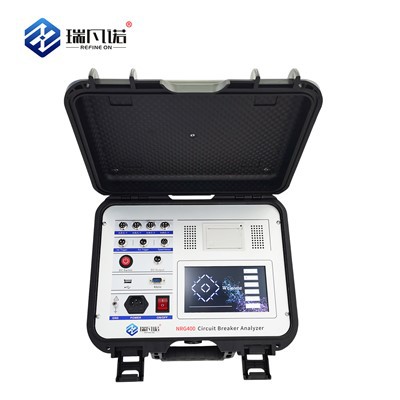
Let’s start with a quick reality check: power isn’t perfect. The grid delivers alternating current (AC) at a standardized frequency—usually 50Hz or 60Hz, depending on the region—and a nominal voltage, like 120V or 480V for industrial use. But along the way, all sorts of factors muck this up: variable speed motors, solar inverters, EV chargers, even older lighting systems. These loads pull non-linear current, meaning they don’t draw power in a smooth sine wave shape. The result? Distortions, fluctuations, and anomalies that don’t trip breakers but ruin sensitive equipment. A power quality analyzer’s whole job is to spot these tiny, fast-moving issues before they cause downtime, and it does it in real time—meaning it’s measuring, processing, and flagging problems as they happen, not hours or days later.
First, let’s talk about the hardware that makes real-time detection possible. You can’t measure power quality with a standard multimeter, because multimeters only capture average voltage and current over a set period, usually a full second. A power quality analyzer uses high-speed sensors—current transducers and voltage probes—that sample the electrical signal thousands of times per second. For context, most entry-level analyzers sample at 128 samples per cycle (for a 60Hz grid, that’s over 7,600 samples per second), while mid-range and industrial models hit 256 or even 512 samples per cycle—more than 30,000 samples per second. That speed is non-negotiable. A voltage sag that lasts just a few milliseconds, too short to register on a multimeter, can cause a PLC (programmable logic controller) to reset, wiping hours of production. The sensor’s job is to capture every one of those millisecond-scale blips.
Once the analyzer has that raw, high-speed data, it’s time for the real-time processing engine—this is where the magic happens, and it’s not just basic math. The core work here is called digital signal processing (DSP), and modern analyzers run purpose-built DSP algorithms that are programmed to spot a laundry list of power quality issues, each with its own signature. Let’s break down the most common issues and how an analyzer catches them as they occur.
First up, harmonics. Harmonics are distortions of the sine wave, caused by non-linear loads like variable frequency drives (VFDs), LED lighting, and battery chargers. The base 60Hz signal has “harmonics” that are multiples of that frequency—so 120Hz, 180Hz, 240Hz, etc. Left unaddressed, harmonics can overheat transformers, cause circuit breakers to trip falsely, and reduce equipment lifespan. How does an analyzer detect harmonics in real time? It uses a mathematical process called Fast Fourier Transform (FFT), which breaks down the raw sampled signal into its individual frequency components. As soon as the FFT calculation finds a harmonic amplitude that exceeds the set threshold (we let our customers customize these thresholds, because a 5% harmonic level might be acceptable for a warehouse but not for a medical facility’s imaging equipment), the analyzer flags it immediately. This isn’t a delayed calculation—on mid-range models, FFT runs every cycle, so harmonic issues are caught the second they start, not after they’ve built up for minutes.
Next, voltage sags and swells. A voltage sag (or dip) is a drop in voltage by 10% or more below nominal, lasting from half a cycle to a few seconds. A swell is the opposite: a 10% or higher rise in voltage, same duration. These are most often caused by large loads turning on or off—like when a factory’s refrigeration system kicks in, pulling a huge amount of current and temporarily lowering the voltage. For sensitive equipment, even a 100-millisecond sag is enough to make a computer or PLC shut down. To detect these in real time, the analyzer tracks the root mean square (RMS) voltage continuously. RMS is a more accurate measure of actual power delivery than simple peak voltage, because it accounts for the entire cycle. The analyzer is programmed to compare the running RMS voltage to the nominal level at every sample point. If it drops below or rises above the threshold, it logs the event, captures the waveform leading up to and during the sag/swell, and triggers an alert—all before the load that caused it has even finished starting.
Then there are flickers, which are less about equipment damage and more about nuisance for end users. Voltage flicker is the visible fluctuation in light caused by varying loads, like arc furnaces or rolling mills. It’s measured using a metric called the short-term flicker severity (Pst), which is calculated over 10 minutes, and long-term flicker (Plt) over 2 hours. But here’s the real-time part: the analyzer doesn’t wait until those 10 minutes are up to start tracking. It calculates flicker components as the voltage fluctuates, updating the Pst value continuously so that plant managers can see if their arc furnace is causing flicker within minutes, not hours. Some of our analyzers even have a built-in light simulator to test if the flicker is perceptible to human eyes, which is a huge help for commercial buildings where tenants complain about flickering lights.
Transients are another critical issue—these are the spike or dip that lasts less than a millisecond, caused by lightning strikes, switching of large equipment, or even electrostatic discharge. Transients can punch through insulation and destroy semiconductors, even if they never show up in RMS or harmonic readings. How does an analyzer catch something that happens in a fraction of a millisecond? It’s all about sampling speed and trigger settings. Our industrial models have a transient capture mode that can sample up to 1 million samples per second, so when a transient hits, the analyzer’s trigger (which can be set to voltage, current, or even rate of change of voltage) captures the event, including the pre-transient waveform—meaning you can see exactly what happened before and after the spike, not just that it occurred. This is invaluable when a plant is seeing repeated equipment failures that technicians can’t explain; the transient data will often point to a nearby lightning strike or a faulty breaker switching causing the damage.
Now, here’s what sets a quality power quality analyzer apart from a basic data logger: real-time context and actionable data, not just raw numbers. A lot of budget devices will just log voltage and current, but they don’t connect those readings to what’s happening in the facility. Our analyzers, for example, can integrate with other building management system (BMS) or industrial control system (ICS) data, so when a sag is detected at 2:14 a.m., it pulls up the data from the VFDs, compressors, or other loads that were running at that exact time. That means the user doesn’t have to sift through hours of data to figure out what caused the issue— the analyzer does it in real time, grouping events and linking them to specific loads.
I’ve seen this work firsthand at a food processing plant in Ohio that was throwing out 200 pounds of frozen chicken a week because their packaging lines were mislabeling cartons. The plant manager had tried everything: resetting the PLCs, replacing sensors, even upgrading the power feed, but the problem persisted. We installed our analyzer on the line’s power feed, and within 10 minutes, it flagged a series of tiny, 5-millisecond voltage sags that aligned exactly with the times the packaging line was misfiring. The analyzer’s integrated data showed those sags happened every time the plant’s adjacent conveyor belt (which ran on a VFD) sped up or slowed down. We adjusted the VFD’s ramp rate, eliminating the sags, and the plant cut their mislabeling rate to near zero. That’s the power of real-time detection: it doesn’t just tell you something is wrong—it tells you when and where, while the issue is still happening.
Of course, real-time detection only matters if the analyzer can get the data to the people who need it, fast. That’s why modern analyzers come with built-in communication options: Wi-Fi, cellular, Ethernet, and even Bluetooth, so they can send alerts to a phone, email, or BMS dashboard the second an issue is detected. Some models even have edge computing capabilities, meaning they don’t have to send raw data to a cloud server for processing—they analyze it right on the device, so alerts come in seconds, not minutes. For remote facilities like wind farms or solar installations, this is a game-changer; you don’t have to drive hours to the site just to find out that a harmonic issue is causing underperformance.
Now, I want to be clear: a power quality analyzer isn’t a silver bullet. It only works if it’s installed correctly, with the right number of sensors on the right circuits. A common mistake we see is customers only installing an analyzer on the main feed, but the real issues are on individual branch circuits feeding sensitive equipment. That’s why we work directly with our customers to map their loads, identify critical circuits, and set up the analyzer’s thresholds to match their specific needs—whether that’s a data center where even a micro-sag is catastrophic, or a small retail store where flicker from a new POS system is the main concern.
Over the years, I’ve had customers tell me power quality analyzers are just another expensive tool they don’t need. But after a single unplanned outage costs a factory $100,000 an hour, or a hospital loses critical imaging data because of a hidden transient, they come around fast. The biggest mistake many operations make is waiting for an issue to cause damage before they check their power. A real-time power quality analyzer is like a smoke detector for your electrical system—it doesn’t just alert you after a fire starts; it monitors constantly, catching small issues before they turn into big, costly problems.
At the end of the day, the core of how a power quality analyzer detects real-time issues is a combination of high-speed hardware, sophisticated signal processing, and purpose-built software that’s tailored to the unique needs of different industries. It’s not just about measuring voltage and current—it’s about understanding the shape of the power, the frequency of fluctuations, and the tiny anomalies that only exist for milliseconds. If you’re tired of unplanned downtime, mysterious equipment failures, or unexplained quality issues in your operations, a real-time power quality analyzer is one of the most cost-effective investments you can make.
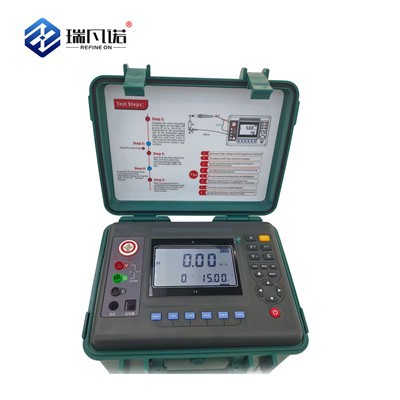
If you’re ready to stop reacting to power quality issues and start catching them the second they happen, we’re here to help. Whether you’re a small business owner looking to protect your equipment, an industrial plant manager dealing with frequent outages, or a facilities engineer tasked with keeping a commercial building running smoothly, we can work with you to find the right power quality analyzer for your needs, and help you set it up to monitor your system in real time. Reach out to us to discuss your specific challenges, and we’ll provide a customized solution that fits your budget and your operations.
CT PT Analyzer References
- IEEE Std 1159-2019, Recommended Practice for Monitoring Electric Power Quality
- McGranaghan, M. F., "Power Quality Monitoring and Analysis," IEEE Transactions on Industry Applications, vol. 35, no. 5, pp. 1095-1101, September/October 1999.
- Thallam, R. S., "Digital Signal Processing for Power Quality Monitoring," CRC Press, 2012.
- Electric Power Research Institute (EPRI), "Power Quality Analyzer Selection and Application Guide," EPRI Report No. 1018947, 2019.
- Klein, Michael, "Real-Time Power Quality Monitoring for Industrial Facilities," Industrial Power Systems Conference (IPSC) Proceedings, 2021.
Refine On (Hebei) Electric Power Technology Co., Ltd.
Refine On (Hebei) Electric Power Technology Co., Ltd. is one of the most reliable power quality analyzer manufacturers and suppliers in China, also supports customized service. Please feel free to wholesale advanced power quality analyzer at competitive price from our factory. Contact us for quotation.
Address: Building 13, Liandong U Valley, No.64, Jing SAN South Street, Economic Development Zone, Mancheng District, Baoding City, China
E-mail: victor@transformer-test.com
WebSite: https://www.transformer-test.com/
