If you’re in the industrial air pollution space, you already know that scrubbers are non-negotiable for keeping emissions in check—whether you’re dealing with fumes from a chemical plant, dust from a metal fabrication shop, or VOCs from a food processing line. But here’s a common headache most operators run into: pressure drop. It’s that constant pain point that kills fan efficiency, hikes energy bills, and even makes your scrubber less effective at removing pollutants. As a scrubber supplier who’s worked with hundreds of teams over the years, I’ve seen firsthand how small, targeted tweaks can cut pressure drop without sacrificing scrub performance. Let’s break down what actually works, no overcomplicated jargon—just practical stuff we’ve tested in the field. Scrubber
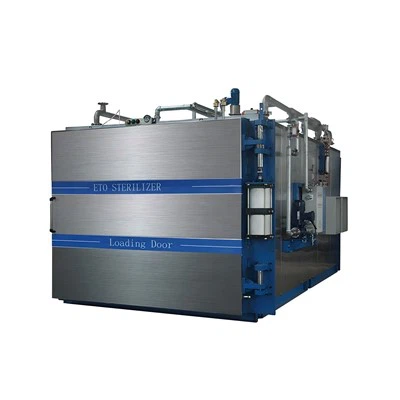
First, let’s get on the same page about what pressure drop is, because it’s easy to gloss over this. Put simply, it’s the resistance the air (or gas) stream faces as it moves through your scrubber’s internal parts: the packing, the nozzles, the mist eliminator, even the ductwork leading to and from the unit. If that resistance is too high, your fan has to work way harder to push gas through—think of it like trying to blow air through a crumpled straw instead of a straight one. A 10% reduction in pressure drop can actually cut fan energy use by up to 10-15%, which adds up fast, especially for large, 24/7 operations. I can’t tell you how many times a client has come to us complaining about $20k+ a year in extra energy costs, just because their pressure drop was 20% higher than it needed to be.
Let’s start with the part most people mess up: the packing material. Packing is that random or structured media inside the scrubber that makes the contact between gas and liquid, right? The wrong packing, or even worn-out packing, is a top cause of excess pressure drop. A lot of operators still use traditional random packing like Berl saddles or Raschig rings from 20 years ago. Sure, it’s cheap upfront, but it has a narrower flow path for gas, so more resistance. We switched our go-to packing a few years back to high-efficiency structured packing, and the difference in pressure drop was night and day—we’ve seen 15-25% lower pressure drop on new installs, and even retrofits when we swapped out old random packing. Wait, and don’t forget to check if your packing’s clumped or fouled. Over time, mineral deposits, dust, or even biological gunk builds up, narrowing those flow paths. A quick quarterly visual check, or a pressure drop trend analysis (if you have basic sensors) will catch that early. If you see pressure climb 5-10% in a few months, a chemical wash or repacking is way cheaper than buying a new fan or paying for extra energy.
Next up, the spray nozzles. This is another big culprit that’s easy to overlook. Nozzles are what break the scrubbing liquid into tiny droplets to mix with the gas. If your nozzles are clogged, mismatched, or worn, they don’t spray the right way. Clogged nozzles create uneven liquid distribution—some spots have too much liquid (which blocks gas flow, upping pressure drop) and some have too little (so your scrubber doesn’t work as well). We once worked with a grain processing plant that kept having spiking pressure drops, and it turned out their nozzles were clogged with fine grain dust. We swapped their old, low-pressure full-cone nozzles for high-efficiency hollow-cone nozzles that spray a wider, thinner mist at a lower pressure. That alone cut their pressure drop by 18% in the first month. Pro tip: Don’t just clean nozzles—replace them every 1-2 years, even if they look fine. Nozzle tips wear down, and even a small 10% increase in orifice size can mess with flow and pressure. Also, make sure you’re sizing your nozzles correctly for your flow rate. Too many people just use whatever was installed before, but if your gas flow went up (say, you expanded your production line), your nozzles are now working too hard, creating unnecessary resistance.
Then there’s the mist eliminator, which is super important but often the hidden source of pressure drop. The mist eliminator’s job is to catch any liquid droplets that escaped the scrubber before they leave the stack, right? But if it’s too dense, or if it’s fouled with leftover liquid and gunk, it adds a ton of resistance. A lot of plants install the thickest, densest mist eliminator they can find “just to be safe,” but that’s a mistake. We recommend a mist eliminator that’s sized for your specific droplet load, not one that’s overbuilt. For example, if your scrubbing liquid has small droplets (like oil mist from a metal shop), you don’t need a super dense eliminator—one with 25 mm crimps works way better than 50 mm, and cuts pressure drop by 10% or more. Again, fouling is the enemy here. If you see liquid buildup on the eliminator, that’s not just upping pressure drop—it can lead to carryover (liquid in your stack), which is a whole other compliance issue. A monthly visual check, or a quick pulse of high-pressure water to clean it off, will keep that pressure low. We’ve had a cement plant client where their pressure drop dropped 22% after we swapped their old, oversize mist eliminator for a properly sized one, plus a quick cleaning schedule. That’s a win-win: lower energy use, and no more liquid carryover violations.
Don’t sleep on the distribution of gas and liquid inside the scrubber, either. A lot of pressure drop comes from uneven flow—if gas is rushing through one side of the scrubber and the other side is stagnant, you’re going to get higher resistance in the fast areas. Installing flow straighteners at the inlet of the scrubber fixes this. Flow straighteners are just simple, grid-like structures that align the gas stream so it’s evenly distributed across the entire cross-section of the scrubber. We’ve used these on retrofits where the inlet duct was too long or curved, which messes up gas flow. Adding a flow straightener can cut pressure drop by 5-10% without any other changes. And for the liquid distribution—if your spray nozzles are only covering 80% of the scrubber’s inner wall, the liquid pools in the spots that are covered, which blocks gas. A liquid distributor plate (a perforated plate above the packing, spread evenly) ensures liquid flows across the entire packing, so no pooling. We tested this on a chemical plant’s scrubber, and it cut pressure drop by 12% just by fixing the liquid distribution. It’s a cheap add-on, way cheaper than a new fan.
Now, let’s talk about ductwork, because it’s not just the scrubber itself. A lot of operators focus all their attention on the scrubber and forget that the ducts leading to and from it are adding to pressure drop. Sharp 90-degree elbows, too-small duct diameter, or even buildup of dust or debris in the ducts can kill efficiency. For example, a sharp elbow can create a 15-20% pressure drop all on its own, compared to a gradual, wide-angle elbow. We recommend using elbows with a radius at least 3 times the duct’s diameter, or adding a vane inside the elbow to smooth the flow. And if your duct is narrower than the scrubber’s inlet, that’s a choke point—make sure your duct diameter matches or is slightly larger than the scrubber’s inlet to avoid squeezing gas through. Every couple of years, do a duct inspection to clear out any built-up dust or gunk. We once worked with a lumber mill where their ducts were half-full of sawdust, adding 25% to their total pressure drop. A good duct cleaning fixed that, and they didn’t have to touch the scrubber itself. That’s a simple fix that’s easy to overlook.
Wait, let’s address a common myth: higher gas velocity means better scrubbing, right? Sort of, but only up to a point. If you push gas too fast through the scrubber, you get what’s called flooding—when the liquid can’t flow down through the packing fast enough, and it starts to back up. Flooding causes a huge spike in pressure drop, and it also makes your scrubber way less effective at removing pollutants. That’s a balance you have to strike. We always tell clients to run their gas velocity at 70-80% of the flooding velocity for their packing. If you’re above that, you’re not getting better scrub performance—you’re just wasting energy and creating unnecessary pressure drop. We’ve had clients who cranked up the fan to “make the scrubber work better,” only to see pressure jump 30% and energy bills go through the roof. Backing off the velocity a little fixed that immediately.
Now, what if you’re dealing with an older scrubber that’s already installed, and you can’t do a full repipe or repack? There are still small, low-cost fixes. For example, if your nozzles are clogged, ultrasonic cleaning is way more effective than just hand-cleaning, and it gets rid of gunk that you can’t see. Or if your mist eliminator is fouled, a chemical wash (using a mild acid or base, depending on what’s causing the buildup) can bring it back to almost new without replacing it. We’ve done a lot of retrofits where clients didn’t want to spend $50k on a new scrubber, so we implemented these smaller changes, and they saw pressure drop reductions of 15-20% for a fraction of the cost. That’s the beauty of this stuff—it doesn’t have to be a big investment.
Wait, let’s also talk about maintenance schedules, because this isn’t a one-and-done fix. Pressure drop isn’t static—it changes over time as your operation changes, as your scrubber gets fouled, as production volumes go up or down. So, tracking pressure drop trends is key. Most modern scrubbers come with basic pressure sensors, so you can log the pressure drop every month. If it starts climbing steadily, that’s a heads-up that something’s off—nozzles clogging, packing fouling, ducts building up. Catching it early means you can fix it for a few hundred dollars, instead of waiting until it’s spiked and you’re paying thousands in extra energy. We have a lot of clients who set up a monthly check, and it’s saved them more than we bill them for in a year.
Let me also share a quick story that sums this up. A food processing plant that makes potato chips was coming to us every year complaining their scrubber’s energy costs were too high. They had a 10-year-old scrubber with original packing, clogged nozzles, and a mist eliminator that was 5 years past its replacement date. We did a full walkthrough: swapped the old Raschig rings for structured packing, replaced all the nozzles with hollow-cone high-efficiency ones, cleaned the mist eliminator, and adjusted their gas velocity to 75% of flooding. The total cost was around $12k, and their pressure drop dropped from 1.8 inches of water to 1.2 inches. Their annual energy savings? $21k. They paid for it in 7 months, and now they’re saving more every year. That’s the kind of win we love to see—no fancy tech, just smart tweaks.
Now, I know some of you might be thinking, “This sounds great, but what if I’m not sure which part is causing my pressure drop?” That’s where we come in. We don’t just sell scrubbers—we do free (yes, free) walkthroughs of your facility, check your current setup, map out where the excess pressure is coming from, and give you a custom plan to cut pressure drop without messing up your emissions compliance. We’ve worked with all kinds of industries—chemical, food processing, metal fabrication, grain processing, mining—so we know the unique issues each has. Whether you’re looking for a small tweak or a full retrofit, we can help. If your energy bills are through the roof, or your scrubber’s not performing as well as it should, don’t guess at solutions—reach out. We’ll come take a look, no obligation.
Industrial EO Sterilizer References:
- Perry, R. H., & Green, D. W. (2008). Perry’s Chemical Engineers’ Handbook (8th ed.). McGraw-Hill.
- Kern, D. Q. (1950). Process Heat Transfer. McGraw-Hill.
- Coulson, J. M., Richardson, J. F., Backhurst, J. R., & Harker, J. H. (1999). Chemical Engineering Volume 2: Particle Technology and Separation Processes (5th ed.). Butterworth-Heinemann.
- Air Pollution Control Association. (1985). Control of Atmospheric Pollutants: Scrubber Design and Operation. APCA Press.
- American Society of Mechanical Engineers (ASME). (2014). Pressure Drop Calculations for Gas-Liquid Contacting Equipment. ASME International.
Hangzhou Riches Engineering Co., Ltd.
Hangzhou Riches Engineering Co., Ltd. is one of the most professional scrubber manufacturers and suppliers in China, specialized in providing high quality custom service and ODM service. We warmly welcome you to buy high-grade scrubber for sale here from our factory.
Address: No. 368, Wenjiao Road, Fuyang District, Hangzhou
E-mail: jason@riches-company.com
WebSite: https://www.eto-sterile.com/
