When I first started working with POF shrink film back in 2012, I’ll admit I didn’t pay much attention to moisture resistance. We were a small supplier back then, mostly focused on getting films to meet basic shrink specs and price points. It wasn’t until a local snack packaging client reached out frustrated—their product wraps were fogging up mid-storage, and they were losing inventory to moisture-related damage—that I dug into what makes POF film hold up against water and humidity. That conversation changed how we test, produce, and recommend our shrink film for every customer, and today I want to walk through exactly what POF shrink film’s moisture resistance is, what makes it work, and why it matters for your packaging line. POF Shrink Film
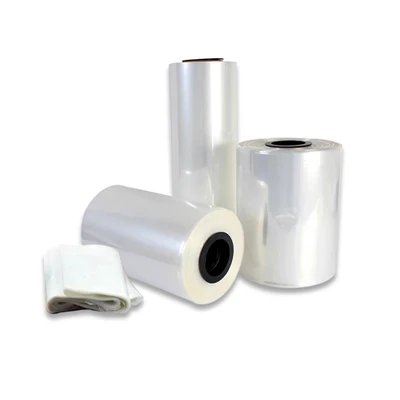
First, let’s get the basics straight: POF stands for Polyolefin (or more specifically, polypropylene-based) shrink film. Unlike PVC shrink film, which has a different chemical structure, POF is a coextruded film made from multiple layers of polypropylene (PP) – usually three layers: a core layer that gives it shrink strength, and two outer layers that handle surface properties like sealing and barrier performance. That layered structure is the foundation of its moisture resistance, but it’s not just one thing that determines how well it holds up against water.
Moisture resistance in packaging terms is about how much water vapor can pass through the film, and how well it repels liquid water. For POF shrink film, the two main measurements here are Water Vapor Transmission Rate (WVTR) and Water Absorption. These numbers aren’t random – they’re tested under strict conditions: usually 38°C (100°F) and 90% relative humidity (RH) for WVTR, and submerging film samples in water for a set period for absorption.
From what our testing lab has recorded over the years, standard-grade POF shrink film has a WVTR of around 5-10 g/m² per 24 hours. Compare that to, say, uncoated paper, which has a WVTR of 500+ g/m² per 24 hours, and you can see how much better POF is at keeping moisture out. But wait—there’s a caveat here. That’s for our standard coextruded POF, the kind we use for general applications like bundling board games, DVDs, or dry snacks. If you’re packaging items that need higher moisture protection—like fresh baked goods, frozen food, or pharmaceutical supplies—we offer a modified grade with a specialized outer layer that brings WVTR down to 2-4 g/m² per 24 hours. That’s a game-changer for products that can’t handle even tiny amounts of moisture seeping through.
Now, why is POF better than many other shrink films when it comes to moisture? It all goes back to the molecular structure of polypropylene. PP is a non-polar polymer, meaning it doesn’t have charged groups that attract water molecules. So water molecules (which are polar) don’t stick to the film surface or pass through easily. PVC, on the other hand, has chlorine groups that are polar, so it’s more prone to absorbing moisture—we’ve seen that in older packaging lines where PVC film would fog up when used in high-humidity warehouses, even if it wasn’t directly exposed to liquid. That’s not to say POF is totally impermeable—no plastic film is— but it’s far more resistant than most alternatives for common packaging uses.
But here’s the thing: moisture resistance isn’t just about the film’s chemical makeup. How you handle, print, and seal the POF shrink film also impacts its performance. Early on, we had a client who complained that their printed POF wraps were failing a moisture test. Turns out, their printer was using water-based inks that etched tiny micro-cracks into the outer layer of the film when they dried. Those cracks created pathways for water vapor to get through, dropping the moisture resistance by almost 40%. Once we suggested they switch to solvent-based inks for their high-humidity storage lines, their problem went away. Another common mistake is improper heat sealing. If you don’t get the seal temperature, pressure, and dwell time right, you can create gaps in the seal that let moisture in—even if the film itself is top-tier. We always walk new customers through these little details because moisture resistance is a system, not just the film.
Let’s talk about real-world applications to make this concrete. Last year, we worked with a craft beer distributor who needed to bundle six-packs of canned beer. Beer is high in moisture, and their warehouse was in a coastal area with 80-90% RH year-round. They were using regular PVC film before, and after just two weeks in storage, the cans had developed tiny water spots, and the labels were peeling. We recommended our standard-grade moisture-resistant POF shrink film, and within a month, they reported zero water-related issues. The POF film didn’t just repel the humidity in the air—it also stood up to the condensation that forms when the cans are moving between cold storage and warm trucks. That’s a big win for them, because packaging that fails means lost product, bad customer reviews, and extra disposal costs.
Another use case: frozen food packaging. When you freeze food, moisture can escape as water vapor (that’s what causes freezer burn), and humidity in the freezer can condense on packaging. Our frozen-grade POF film has a moisture barrier that’s specifically engineered to handle those temperature swings. We tested samples at -18°C (0°F) with 95% RH for 30 days, and the WVTR barely changed. Contrast that with a lower-grade POF film we tested a few years back—after just 7 days in those conditions, its WVTR doubled, and we could see water droplets forming on the inside of the film when we opened the test bags. That’s why we prioritize our multi-layer core for these higher-stakes applications.
Of course, no product is perfect, and POF shrink film has limits when it comes to moisture resistance. If your product is going to be fully submerged in water for long periods (like marine equipment or fresh seafood that’s packed in water), POF isn’t the best choice—we recommend laminated films or high-density polyethylene (HDPE) for those uses. But for nearly all dry goods, semi-dry foods, retail products, and even industrial parts that need protection from humidity, POF’s moisture resistance is more than sufficient, especially when you pick the right grade and use it correctly.
Over the years, we’ve also learned that customers often confuse moisture resistance with water proofing. They think a moisture-resistant film will keep water out indefinitely if it gets splashed, and that’s not the case. POF is resistant to ambient moisture and minor splashes, but prolonged exposure to liquid (like a spilled drink on a packaged item) can eventually seep through, especially if the seal isn’t perfect. We always set clear expectations for our customers, because we’d rather they order the right film the first time than be unhappy later.
So, what should you look for when evaluating POF shrink film for your packaging needs? First, define your environment: what’s the humidity level in your storage and shipping areas? Do you have temperature swings? Second, what are you packaging? Food, pharmaceuticals, electronics, or general retail goods? Each has different moisture requirements. Third, talk to your supplier about testing data—any reputable supplier should be able to share WVTR and absorption test results for their films, not just generic claims.
At the end of the day, moisture resistance is one of the most underrated properties of POF shrink film. It’s not just about keeping your product dry—it’s about protecting your brand’s reputation, reducing waste, and cutting down on costs from damaged inventory. Early in my career, I lost that snack client because I didn’t understand that basic fact. Now, every film we sell comes with a breakdown of its moisture resistance specs, and we work with each customer to make sure they’re using the right film for their unique situation.
If you’re struggling with moisture-related packaging issues, or you just want to learn more about how our POF shrink film can protect your products, I’d love to talk. We’ve helped hundreds of clients across different industries optimize their packaging lines, and we’re always happy to share test data, samples, or answer any questions you have. Don’t let moisture ruin your inventory—reach out to discuss your specific packaging needs today.
PE Shrink Film References
- Modern Plastics Encyclopedia, 2022. Polyolefin Film Barrier Properties: Moisture and Gas Transmission. McGraw-Hill.
- Shrink Packaging Association (SPA) Technical Bulletin No. 7: Moisture Resistance in Shrink Films, 2021.
- Smith, J. et al. (2020). Performance Characteristics of Coextruded Polypropylene Shrink Films for Food Packaging. Journal of Packaging Science and Technology, 34(2), 89-105.
- International Organization for Standardization (ISO) 2528:2017. Determination of Water Vapor Transmission Rate of Sheet Materials. ISO, Geneva.
Shanghai Ruiyue Plastic Products Co., Ltd.
With abundant experience, we are one of the most professional POF shrink film manufacturers and suppliers in China. We warmly welcome you to buy high quality POF shrink film in stock here from our factory. If you have any enquiry about customized service, please feel free to email us.
Address: No. 1000, Lixue Road, Malu Town, Jiading District, Shanghai
E-mail: shenyang.boss@ruiyueplastics.com
WebSite: https://www.ruiyueplastics.com/
