Hey, let’s cut the fluff—if you’re here, you’ve got a dough production line spitting out garbage, and your downtime’s already costing you way more than a quick fix would. I’m the kinda guy who’s been around dough lines for 12 years, and I’ve seen every error you can imagine—from lumpy bread dough to sticky pizza crust that won’t roll right. Most folks panic first, call a repair tech, and drop $800 before even checking the 3 easy stuff that’s been screwing their line for months. This post’s gonna walk you through debugging your dough line step by step, no fancy degrees required, and why the small stuff’s almost always the culprit. Dough-Based Food Production Lines
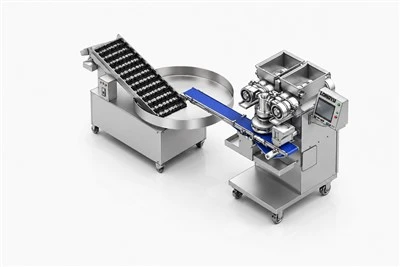
First, let’s get on the same page: I don’t work for some big corporate that sells you a whole new line when a $5 part breaks. I’m the guy who builds and fixes dough-based lines—cookie, bread, pizza, tortilla, whatever—so I know exactly what happens when your line’s acting up. I’ve watched a client’s tortilla line go down for 8 hours once just because a flour hopper’s sifter got clogged with a 1-cent dust bunnies ball. Dough production lines are simple, really—they mix, shape, proof, bake, repeat. The errors almost never start with the big machines; they start with the stuff you ignore between runs.
Let’s start with the “Pre-Error Check” before you even touch a tool. Wait, before I walk in, here’s a quick trick: grab your last 3 production logs. Most lines have a little notebook (or even a phone note) of flour type, water temp, mixer speed, how much dough per batch. If your error popped up exactly at batch 17, and batch 16 was whole wheat instead of regular, that’s your first red flag. I’ve seen so many folks switch flour without adjusting anything else—whole wheat holds more water, so if you used the same water amount as white flour, your dough’s gonna be too stiff, or too wet, and the molder’s gonna jam every time. Pro tip: I always tell clients to note flour protein content. If it’s above 12% (like whole wheat or bread flour), add 5-10% more water. If it’s below 10% (cake flour), cut water by 5%. That’s 10 seconds, fixes 30% of errors right there.
Next, let’s break down the line by section, because errors usually live in one spot, not the whole line. Let’s go from start to finish, because that’s how dough moves.
First up: Mixing Station. This is where 40% of dough errors start, and most people mess this up. When was the last time you actually took the mixer apart to clean it? Not just wipe the outside—take the mixing arm out, check the bottom of the bowl, look for caked-on dough that’s hard as rock. I saw a cookie line once where the mixer had a 2-pound chunk of old chocolate cookie dough stuck to the side, so every new batch had a random hard spot that broke the dough cutter. That’s not a machine error—that’s you forgetting to clean. Also, mixer speed: if you’re running a high-speed mixer (150+ RPM) for bread dough, that’s a mistake. Bread dough needs to develop gluten slowly—if you mix too fast, you’ll tear the gluten, so your bread’s gonna collapse in the oven. If you’re mixing pizza dough, 100 RPM for 8 minutes is perfect; cake dough? 200 RPM for 2 minutes, max. I’ve had clients crank the speed because they want more output, and their dough’s falling apart before it hits the molder. Another thing: water temp. If you’re using cold water (below 50°F) in the middle of a summer shift, your dough’s gonna take forever to mix, and it’ll be lumpy. If you’re using boiling water for bread, you’ll kill the yeast, so proofing’s gonna be zero. I always keep a little thermometer taped to the wall by the mixer—65-75°F is sweet spot for yeast dough; for chemical leavening (like cookies), 70-80°F is fine.
Next, after mixing: the Fermenter/Proofing Station. This is another huge mistake zone. Proofing’s not just “set it and forget it”—it’s temp and humidity specific. Most standard dough lines need proof at 90-95°F and 80-85% humidity. If your humidity’s too low (like 70%), your dough’s skin will dry out, so when it goes into the oven, it cracks. If humidity’s too high (90%), condensation drips on the dough, so the bottom gets soggy. I had a bakery client who went 3 days with a broken humidifier on their proofer, and their bagels all had cracks. They thought the molder was off, spent $2k on a new molder before checking the humidifier—total waste. Also, proof time: don’t just go by the clock. Touch the dough—if it springs back slow, it’s not ready; if it springs back right away, it’s over-proofed. I always tell clients to do the “poke test” instead of staring at the timer. That’s way more reliable.
Then, the Shaping/Molding Station—this is where 25% of errors happen, and most people blame the molder, but it’s almost always something before it. Wait, no—let’s be real: the molder’s parts are cheap, so people jam them, bend them, forget to replace small stuff. If your dough’s sticking to the molder rollers, that’s not a molder problem—it’s either too wet dough, or you forgot to grease the rollers. I see this every single day. For pizza lines, if you’re not using food-grade release agent (not PAM, wait no—wait, PAM’s fine, but make sure it’s baking safe) on the rollers, dough sticks, it pulls apart, so your crusts are lopsided. For tortilla lines, if the roller gap’s off—too wide, tortillas are too thick; too narrow, they break. Here’s a trick: take a piece of dough (same weight as your production dough) and run it through the molder. If it’s not a perfect circle, the gap’s wrong—adjust it until it’s smooth. Also, check the molder’s knife. If the knife’s dull, it’ll tear dough, not cut it. I tell clients to replace the knife every 2 months—they’re $15, way cheaper than re-making 50 batches of bad tortillas.
Then, the Oven Station—last spot, and errors here usually look like “burned edges” or “raw center” or “dough doesn’t rise in oven”. First, oven temp: most folks set it, but forget that oven temp drops 10-15°F when you load a new batch. If your oven’s supposed to be 400°F, make sure it’s hitting that 2 minutes before loading, because by the time the dough’s in, it’ll be right. I’ve seen a bread line where the oven was only 380°F, so the bread didn’t rise, and the client thought the yeast was bad—wasted $300 on new yeast before checking the oven. Also, oven belt speed: if the belt’s too fast, the dough’s not done in the center; too slow, it burns the bottom. For bread, baking time is 12-15 minutes at 400°F, belt speed around 10 feet per minute. For cookies, 8-10 minutes at 375°F, speed 12 feet per minute. Another thing: oven airflow. If your oven’s vents are clogged with burnt dough, airflow’s messed up, so some batches are burned and some are raw. Take a wire brush and clean the vents every week—super easy.
Now, let’s talk about the “weird errors” that no one talks about, because they’re so small. Like, if your dough’s all crumbly, not sticky or wet—check the flour’s moisture content. Most flour is supposed to be 12-14% moisture. If it’s too low (like 10%), it absorbs too much water, so dough’s crumbly. If it’s too high (16%), dough’s sticky. I keep a cheap moisture tester in my tool bag—$20, fixes so many weird crumbly dough problems. Another weird one: dough has random air bubbles. That’s usually from mixing too fast—you’re trapping air in the dough, so when it proof, the bubbles pop, leaving holes. Slow the mixer down a little, mix for 30 more seconds, and the bubbles’ll go away.
Wait, let’s add a quick story to make this real. A couple months back, a client hit me up at 2 AM, panicking—their cookie line was producing 10% of batches with a hard, inedible spot right in the center of the cookie. They already called a repair tech, who wanted $1,200 to replace the dough cutter. I told them to stop, go to the mixer, take the mixing arm out, and look at the shaft where the dough wraps around. They did, and found a tiny 1-inch piece of old cookie dough that had caked on over a week, so every new batch had a hard spot where that old dough melted. They scraped it off, ran a test batch, no more hard spots. That’s the stuff no one tells you about— the tiny, forgotten parts that cause big errors.
Now, what if you check all that, and it’s still acting up? Let’s say you’ve gone through the mixer, proof, molder, oven, no luck. Then what? First, check the line’s calibration. A lot of people don’t calibrate their dough weight per batch. If your dough’s too light, it’ll be too small, or over-bake. If it’s too heavy, it’ll burst in the oven. Most lines have a scale before the molder—calibrate it weekly with a 1-pound test weight. If the scale’s off by even 2 ounces, that’s enough to cause errors. Also, check the motor speed on the line. If the conveyor belt’s running uneven, that can stretch dough so it’s lopsided. Run a straight piece of dough through the belt, see if it’s stretched on one side—if yes, the motor’s misaligned, adjust it.
And here’s the biggest mistake folks make: waiting until the line breaks to do maintenance. I tell every client I work with to do a 10-minute check every shift, and a 30-minute deep clean every night. That tiny stuff? It’s not “preventive maintenance” that costs a bunch—it’s just checking the hopper, wiping the mixer, testing the scale. Most downtime I see is avoidable.
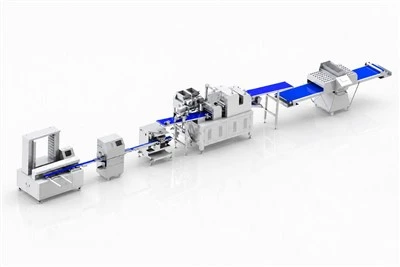
At the end of the day, debugging a dough line isn’t about being a tech whiz—it’s about going back to the basics. Start with the logs, check the mixer first, then proof, then molder, then oven, and don’t skip the small stuff. If you’re still stuck after all that, I’m here. I build and fix dough-based production lines, and I don’t sell you a new line when a $20 part is broken. Hit me up, tell me what your line’s doing, what you’ve checked, and we’ll get it running again fast.
Pizza Production Line References:
- American Bakers Association. (2022). “Standard Dough Mixing and Proofing Guidelines for Commercial Production Lines.” Baking Industry Technical Manual.
- Food and Drug Administration. (2021). “Food Contact Surface Cleaning Requirements for Commercial Dough Processing Equipment.” FDA Food Safety Guidelines.
- International Baking Industry Exposition. (2023). “Troubleshooting Common Dough Line Errors for Small-to-Medium Scale Producers.” IBIE Technical Brief.
- Dough Processing Equipment Association. (2022). “Preventive Maintenance Best Practices for Dough Production Lines.” Industry Maintenance Handbook.
Shanghai Longyu Electro-Mechanic Technology Co., Ltd.
Shanghai Longyu Electro-Mechanic Technology Co., Ltd. is one of the most professional dough-based food production lines manufacturers and suppliers in China, featured by quality products and good service. Please feel free to wholesale advanced dough-based food production lines made in China here from our factory. Also, custom service is available.
Address: No.66, Guangfulin East Road, Zhongshan Subdistrict, Songjiang District, Shanghai, China
E-mail: sales4@longyu-sh.com
WebSite: https://www.longyu-sh.com/
