If you’ve ever stood near a high-voltage substation on a clear day, you might have glanced up at the silver, L-shaped high voltage disconnectors perched atop tall ceramic insulators and wondered why they look so long—like they’re built to stretch almost twice as far as necessary to just reach the bus bars. As a high voltage disconnector supplier who’s spent 12 years designing, testing, and troubleshooting these components for utility grids and industrial power plants across North America, I can tell you that that extra length isn’t a design flaw; it’s the creepage distance, and it’s one of the most misunderstood, yet critical, specs that can make or break a disconnector’s performance. High Voltage Disconnector
Let’s start with the basics, because if you get this wrong, no amount of fancy engineering will save you from a service outage. When we talk about high voltage equipment, most people jump right to “flashover voltage”—the voltage at which electricity jumps through the air between two conductors, leaving a tiny trail of plasma that can arc across components. That’s the obvious, immediate risk, and it’s why we test for air gap distances on disconnectors. But creepage is different, and far more insidious.
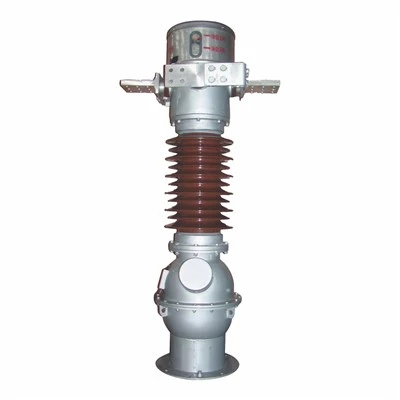
Creepage distance, simply put, is the shortest distance along the surface of a solid insulator between two conductive parts at different voltages. For our disconnectors, that means the distance along the ceramic or polymer insulator that separates the live blade (which carries thousands, sometimes hundreds of thousands, of volts) from the grounded base (which bolts to the substation frame and sits at 0 volts). Unlike air gap, which is limited by the three-dimensional space around the disconnector, creepage is tied to the surface of that insulator—and its job is to combat the number one enemy of high voltage equipment: pollution.
Here’s where the real-world context hits home. I once worked on a project for a utility in the Central Valley of California, where dust, agricultural chemicals, and seasonal fog combine to create an almost perfect storm for contamination. Their old disconnectors had a creepage distance rated for rural, low-pollution conditions, and within three years, we saw regular flashovers during fog events that took whole feeders offline. The problem wasn’t that the air gap was too small—it was that the dust and chemicals had settled evenly along the insulator surface, creating a conductive path for electricity to creep rather than jump through the air. That’s the creepage effect in action, and it’s why we revise our disconnector designs every two years based on local environmental data, not just national standards.
To get a little technical (but in a way that makes sense for anyone who’s ever debated equipment specs with a utility engineer), creepage distance is calculated using a unit called the Specific Creepage Distance (SCD), which is measured in millimeters per kilovolt (mm/kV). The core formula is simple: SCD = Total Creepage Distance / Rated System Voltage. But the variables that go into that number are endless, and that’s where most off-the-shelf disconnectors fall short.
First, there’s the pollution category. International standards like IEC 60815 and IEEE 1183 divide environments into four pollution grades, from Grade 0 (less than 0.03 mg/cm² of salt deposit, basically remote mountain tops) to Grade IV (more than 0.5 mg/cm², heavy industrial zones or coastal areas with salt spray). For a Grade IV coastal substation in Florida, a 145kV disconnector needs around 31 mm/kV of SCD—so total creepage distance of over 4,500 mm. That’s more than 14 and a half feet of insulator surface separating the live blade from the grounded base. But for a Grade 1 rural substation in Iowa, that same 145kV disconnector only needs 16 mm/kV, totaling just over 2,300 mm. Cut that in half, and you’re looking at regular creepage flashovers during the occasional spring rain that stirs up farm dust.
Next, there’s voltage type. Wait, yes—AC and DC operate very differently when it comes to creepage distance. I’ve had clients ask why we can’t use the same disconnectors for their 230kV AC feeder and their new 230kV DC energy storage farm. The answer is that DC voltage is steady, so contaminants build up more evenly and don’t get as much chance to dry and shed during daily voltage fluctuations. A DC disconnector needs 20-25% more SCD than an equivalent AC unit, because the creepage path is carrying a constant charge that can ionize even thin layers of contamination over time. We learned this the hard way five years ago, when we supplied a batch of disconnectors for a DC microgrid in Arizona that had a saltwater cooling system leaking onto the substation yard. The AC-rated units barely held up for a year before we had to retrofitthem with extended insulators that matched DC creepage specs, costing the utility $200k in emergency repairs and making us rethink our one-size-fits-all labeling.
Then there’s the insulator material. Ceramic insulators have been the standard for disconnectors for decades, because they’re durable, cheap, and easy to machine into complex creepage shapes. Polymer insulators, which we’ve offered since 2018, are lighter, more resistant to impact damage, and have a hydrophobic surface that causes water to bead up and roll off instead of forming a conductive film that bridges creepage gaps. But polymer isn’t a silver bullet. In desert environments where UV radiation is intense, silicone polymer can degrade over 10-15 years, losing its hydrophobicity and requiring 20% extra creepage to compensate. In sub-zero climates like Canada’s Alberta oil sands, ceramic insulators are better because polymer can become brittle and crack under ice load, even if their creepage rating is technically higher. We’ve tested both materials for every client, and our biggest win last year was a Northern Alberta utility that switched to our grade-matched ceramic disconnectors with extended creepage, cutting their annual maintenance costs by 40% after a winter of record ice storms.
Now, here’s something that even many senior substation engineers don’t consider: the operating duty cycle of the disconnector. High voltage disconnectors aren’t just stand-alone components—they’re part of a switching scheme that might operate a dozen times a year, or every day in a grid with distributed energy resources. A disconnector that’s only closed or opened a few times a year will have far less contamination buildup on its moving parts than one that’s cycled daily. That means the creepage distance needs to account not just for static pollution, but for the wear and tear of regular operation. For example, our motorized disconnectors (for frequent switching) have a 10% higher creepage rating than our manual, infrequently operated units, because the moving blades brush against the insulator surface slightly with each operation, creating tiny scratches where contaminants can get trapped. It’s a small adjustment, but over 20 years of service, it’s the difference between a disconnector that runs to its 30-year design life and one that needs to be replaced in 10.
I want to address a common myth right now: some suppliers will advertise “ultra-high creepage” as a selling point, as if more is always better. That’s not true. Too much creepage adds unnecessary weight, increases the disconnector’s footprint, and can lead to flashovers during severe wind events, where the length of the insulator acts like a sail and creates mechanical stress that cracks the base. It’s a balance, not a race. When a client comes to us with a spec, the first thing we do is send our field team to survey the site: test the salt deposit density, check for nearby industrial emissions, measure average humidity and UV levels, and ask how often the disconnector will be operated. That data goes into our proprietary creepage calculation tool, which combines IEC and IEEE standards with our 15 years of field failure data—something no generic spec sheet can offer.
A few months ago, we had a client in the Pacific Northwest that thought their 120kV disconnectors were enough for their coastal substation. Their old supplier had given them a 18 mm/kV SCD, which fit their original Grade 2 pollution rating. But during our site survey, we found that a new lumber mill had opened two miles away, releasing wood dust and chemical solvents that pushed their pollution to Grade 3. We recalculated their required creepage at 25 mm/kV, and recommended swapping out their old disconnectors for our modified model, which had the exact creepage distance needed. Six months later, they called to thank us—they’d had a severe rain and wind event that caused three neighboring substation disconnectors to flashover, but ours had held perfectly. That’s the kind of problem-solving that comes from not just reading standards, but talking to the people on the ground who deal with these issues every day.
If there’s one takeaway I want you to leave with, it’s this: creepage distance isn’t just a number on a spec sheet. It’s the invisible barrier between a reliable power grid and a costly outage. For a utility, the cost of a single hour-long outage in a major city can exceed $1 million, so investing in a disconnector with the right creepage distance isn’t an extra expense—it’s risk management. For industrial clients, where downtime in a manufacturing plant can cost tens of thousands of dollars per hour, it’s non-negotiable.
As a supplier, we don’t just sell high voltage disconnectors—we sell expertise in creepage calculation, environmental adaptation, and long-term reliability. Every disconnector we ship is custom-rated for the conditions it will face, because we know that “one size fits all” doesn’t work when it comes to components that carry power across thousands of miles, in every climate from desert to coast to tundra.
If you’re working on a substation project, upgrading existing components, or building a new facility and need to make sure your high voltage disconnectors are properly rated for creepage, we’re here to help. Our team of engineers and field specialists can provide a free site assessment, help you navigate international standards, and design a disconnector that meets your exact needs, no matter how unique your environment is. Reach out to us to discuss your requirements, and we’ll make sure you don’t have to worry about creepage distance derailing your project.
High and Low Voltage Switchgear References:
IEC 60815: Selection and dimensioning of high-voltage insulators intended for use in polluted conditions
IEEE 1183: Guide for application and testing of outdoor high-voltage switchgear and controlgear insulators
ANSI C119.4: Specification for high-voltage alternating-current disconnecting switches for substation use
Zhongtai Electric Power Technology Co., Ltd.
With abundant experience, we are one of the most professional high voltage disconnector manufacturers and suppliers in China. We warmly welcome you to wholesale bulk customized high voltage disconnector from our factory. If you have any enquiry about quotation, please feel free to email us.
Address: High-tech Industrial Park, Chongren County, Fuzhou City, Jiangxi Province (No. 261 Yingbin Avenue)
E-mail: info@zhongtaielectric.com
WebSite: https://www.zhongtaipower.com/
