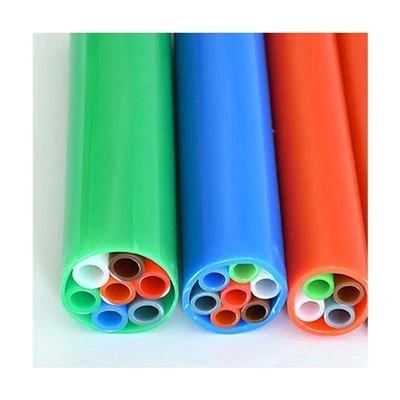
Pressure drop in MPP (Modified Polypropylene) pipes is a crucial concept that significantly impacts the performance and efficiency of fluid transportation systems. As a supplier of MPP pipes, understanding the intricacies of pressure drop is essential for providing our customers with the best products and solutions. MPP Pipe
Understanding Pressure Drop
Pressure drop refers to the decrease in pressure that occurs as a fluid flows through a pipe. This phenomenon is primarily caused by friction between the fluid and the inner surface of the pipe, as well as changes in the pipe’s diameter, bends, and fittings. In MPP pipes, pressure drop can have a substantial impact on the overall efficiency of a system, as it requires additional energy to maintain the desired flow rate.
Factors Affecting Pressure Drop in MPP Pipes
1. Pipe Diameter
The diameter of an MPP pipe plays a significant role in determining the pressure drop. A smaller diameter pipe will have a higher velocity of fluid flow for a given flow rate, which in turn increases the friction between the fluid and the pipe wall. This results in a higher pressure drop. Conversely, a larger diameter pipe will have a lower velocity of fluid flow, reducing the friction and pressure drop.
2. Fluid Velocity
The velocity of the fluid flowing through the MPP pipe is directly related to the pressure drop. As the fluid velocity increases, the friction between the fluid and the pipe wall also increases, leading to a higher pressure drop. Therefore, it is important to design the system to maintain an optimal fluid velocity to minimize pressure drop.
3. Pipe Length
The length of the MPP pipe is another important factor that affects pressure drop. The longer the pipe, the greater the distance the fluid has to travel, and the more friction it encounters. This results in a higher pressure drop. Therefore, it is advisable to keep the pipe length as short as possible to reduce pressure drop.
4. Pipe Roughness
The roughness of the inner surface of the MPP pipe can also affect the pressure drop. A rougher surface will create more friction between the fluid and the pipe wall, leading to a higher pressure drop. MPP pipes are known for their smooth inner surface, which helps to reduce friction and minimize pressure drop.
5. Bends and Fittings
Bends and fittings in the MPP pipe system can cause additional pressure drop. When the fluid flows through a bend or fitting, it experiences a change in direction, which increases the turbulence and friction. This results in a higher pressure drop. Therefore, it is important to minimize the number of bends and fittings in the system and use smooth, well-designed fittings to reduce pressure drop.
Calculating Pressure Drop in MPP Pipes
There are several methods available for calculating the pressure drop in MPP pipes. One of the most commonly used methods is the Darcy-Weisbach equation, which is based on the principles of fluid mechanics. The Darcy-Weisbach equation is given by:
ΔP = f * (L/D) * (ρ * V²/2)
where:
ΔP = pressure drop (Pa)
f = Darcy friction factor
L = length of the pipe (m)
D = diameter of the pipe (m)
ρ = density of the fluid (kg/m³)
V = velocity of the fluid (m/s)
The Darcy friction factor (f) depends on the Reynolds number (Re) and the relative roughness of the pipe. The Reynolds number is a dimensionless quantity that represents the ratio of inertial forces to viscous forces in the fluid. It is given by:
Re = (ρ * V * D) / μ
where:
μ = dynamic viscosity of the fluid (Pa.s)
The relative roughness of the pipe is the ratio of the average height of the surface irregularities to the diameter of the pipe. For MPP pipes, the relative roughness is typically very low, which helps to reduce the friction factor and minimize pressure drop.
Importance of Minimizing Pressure Drop in MPP Pipes
Minimizing pressure drop in MPP pipes is important for several reasons:
1. Energy Efficiency
A high pressure drop in an MPP pipe system requires additional energy to maintain the desired flow rate. This increases the operating costs of the system. By minimizing pressure drop, we can reduce the energy consumption and improve the energy efficiency of the system.
2. System Performance
A high pressure drop can also affect the performance of the system. It can cause a decrease in the flow rate, which may lead to inadequate supply of fluid to the end-users. By minimizing pressure drop, we can ensure that the system operates at its optimal performance.
3. Pipe Life
A high pressure drop can also increase the stress on the MPP pipe, which may lead to premature failure of the pipe. By minimizing pressure drop, we can reduce the stress on the pipe and extend its service life.
Our Role as an MPP Pipe Supplier
As an MPP pipe supplier, we play a crucial role in helping our customers minimize pressure drop in their pipe systems. We offer a wide range of MPP pipes with different diameters and wall thicknesses to meet the specific requirements of our customers. Our pipes are manufactured using high-quality materials and advanced production techniques to ensure a smooth inner surface and low friction factor.
In addition to providing high-quality pipes, we also offer technical support and advice to our customers. Our team of experts can help our customers design their pipe systems to minimize pressure drop and optimize the performance of their systems. We can also provide assistance in selecting the appropriate pipe diameter, length, and fittings to ensure that the system operates efficiently.
Conclusion
Pressure drop in MPP pipes is a complex phenomenon that is affected by several factors, including pipe diameter, fluid velocity, pipe length, pipe roughness, and bends and fittings. By understanding these factors and taking appropriate measures to minimize pressure drop, we can improve the energy efficiency, performance, and service life of MPP pipe systems.
PP-R Pipes and Fittings As an MPP pipe supplier, we are committed to providing our customers with the best products and solutions. We offer high-quality MPP pipes, technical support, and advice to help our customers design and operate their pipe systems efficiently. If you are interested in purchasing MPP pipes or need assistance with your pipe system design, please contact us for further discussion.
References
- Crane, D. S. (1988). Flow of fluids through valves, fittings, and pipe. Technical Paper No. 410M. Crane Co.
- Streeter, V. L., & Wylie, E. B. (1981). Fluid mechanics. McGraw-Hill.
- White, F. M. (2003). Fluid mechanics. McGraw-Hill.
Shanxi Kaisheng Plastic Co., Ltd.
Shanxi Kaisheng Plastic Co., Ltd. is one of the most professional mpp pipe manufacturers and suppliers in China, featured by quality products and good price. Welcome to buy durable mpp pipe made in China here and get quotation from our factory. We also accept customized orders.
Address: No. 72, Area S, Gate 1, Haohai Wumart, Fendong Street, Xiaodian District, Taiyuan City, Shanxi Province
E-mail: sxkssj8@163.com
WebSite: https://www.sxksgys.com/
