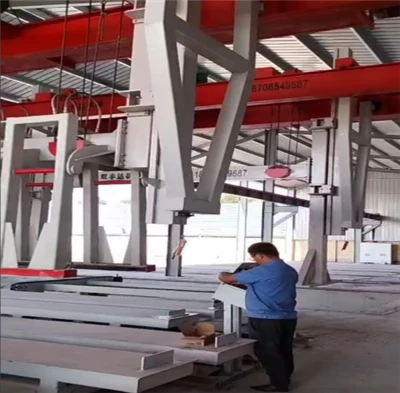
Hey there! I’m a supplier of Aerated Concrete Block Production Lines. Over the years, I’ve seen firsthand how vital it is to guarantee the stability of production quality in this industry. So, let’s chat about how we can make sure that your aerated concrete block production line keeps churning out top – notch products consistently. Aerated Concrete Block Production Line
1. Raw Material Management
The quality of raw materials is the foundation of high – quality aerated concrete blocks. First off, cement is a key ingredient. You gotta choose a reliable cement supplier. Look for one that provides cement with consistent chemical composition and strength. I’ve had clients who skimped on cement quality to cut costs, and boy, did they end up with a bunch of sub – standard blocks!
Lime is another important raw material. It should have a proper calcium oxide content. If the lime quality fluctuates, it can mess up the chemical reactions during the block – making process. We always recommend doing regular quality checks on lime deliveries. You can test for things like fineness and reactivity.
Fly ash, which is a by – product of coal – fired power plants, is also commonly used. Make sure it has low carbon content and proper particle size distribution. A good way to ensure this is to work with power plants that have strict environmental control measures. That way, you can get a more consistent supply of fly ash.
And don’t forget about the aluminum powder. It’s what causes the aeration in the blocks. The particle size and purity of the aluminum powder are super important. Even a small variation in these factors can lead to inconsistent block density. So, source your aluminum powder from a trusted manufacturer and do in – house tests regularly.
2. Equipment Maintenance
Your production equipment is like the heart of your operation. Regular maintenance is a must. For example, the mixers need to be cleaned and inspected frequently. Over time, residue can build up inside the mixers, which can affect the homogeneity of the raw material mixture. If the mixture isn’t well – mixed, you’re gonna get blocks with inconsistent properties.
The cutting machines also need to be in tip – top shape. Dull blades can lead to uneven cuts, which not only affects the appearance of the blocks but also their structural integrity. Make sure to sharpen or replace the blades according to the manufacturer’s recommendations.
The autoclaves are where the curing process happens. They operate under high pressure and temperature, so any malfunction can be a big problem. Regularly check the pressure gauges, safety valves, and heating systems. A small issue with the autoclave can lead to under – cured or over – cured blocks.
We’ve got a team of technicians here who are always ready to help with equipment maintenance. If you’re facing any problems or just need some advice on keeping your equipment running smoothly, feel free to reach out.
3. Process Control
Controlling the production process is crucial for quality stability. Start with the mixing ratio. You need to follow a precise formula for the raw materials. Small deviations in the ratio can have a significant impact on the block’s properties. Use automated dosing systems to ensure accurate measurements of each raw material.
The pouring process also needs to be carefully controlled. The pouring speed and height can affect the distribution of air bubbles in the blocks. If the pouring is too fast or too high, the bubbles can coalesce and create larger voids, which weakens the blocks. You should set up proper pouring parameters and monitor them closely.
During the curing process in the autoclave, temperature and pressure are the key factors. Keep a close eye on the temperature and pressure curves. Any sudden changes can disrupt the curing process and result in inconsistent block quality. Use data loggers to record the temperature and pressure throughout the curing cycle. This way, you can analyze the data later and make adjustments if needed.
4. Staff Training
Your staff is an important part of ensuring production quality. They need to be well – trained on operating the equipment, following the production process, and conducting quality checks. We can provide training programs for your workers.
Teach them about the importance of each step in the production process. For example, explain to the operators why the mixing time and speed are so important. Make sure they know how to identify the signs of a potential quality problem, like a strange color or texture of the blocks.
We’ve found that well – trained staff are more likely to spot issues early and take corrective actions. They can also contribute ideas for improving the production process. So, invest in training your team, and you’ll see a big improvement in the stability of your production quality.
5. Quality Control System
Set up a comprehensive quality control system. This should include in – process inspections and final product inspections. During the production process, check the raw material quality, the mixture homogeneity, and the intermediate products at different stages.
For the final product inspections, test the blocks for various properties such as strength, density, and water absorption. You can use standard testing methods recommended by industry organizations. Keep detailed records of all the test results. This way, you can track the quality trends over time and identify any potential problems early.
If you find any non – conforming products, don’t just ignore them. Analyze the root cause of the problem and take corrective actions. This could involve adjusting the production process, replacing faulty equipment, or retraining the staff.
6. Continuous Improvement
The production process is never perfect. There’s always room for improvement. Keep an eye on the latest industry trends and technologies. For example, new types of additives can enhance the properties of the aerated concrete blocks, or more advanced equipment can improve production efficiency and quality.
Encourage your staff to come up with suggestions for improvement. They’re on the front – line of the production process, so they may have some great ideas. We’re also constantly researching and developing new technologies for our production lines. We’d be happy to share our findings with you and help you optimize your production process.
In conclusion, ensuring the stability of the production quality of an aerated concrete block production line is a multi – faceted task. It involves managing raw materials, maintaining equipment, controlling the process, training staff, setting up a quality control system, and continuous improvement.
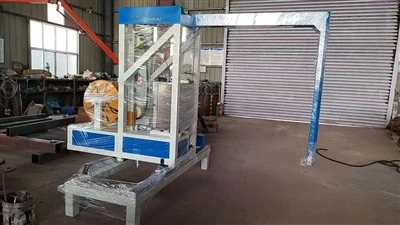
AAC Turning Cutting System If you’re in the market for an aerated concrete block production line or looking to improve the quality of your existing production, we’re here to help. We’ve got years of experience in this industry, and we can provide you with high – quality production lines and all the support you need. Just reach out, and let’s start a conversation about how we can meet your production needs.
References
- "Aerated Concrete – Properties, Production and Applications"
- "Handbook of Construction Materials Testing for Quality Assurance"
- Industry guidelines and standards related to aerated concrete block production.
Qingzhou Shuangfengda Machinery Engineering Co., Ltd.
As one of the most professional aerated concrete block production line manufacturers and suppliers in China, we’re featured by quality products and good price. Please rest assured to buy durable aerated concrete block production line for sale here from our factory. Customized orders are welcome.
Address: Gaojiazhuang Village, Gaoliu Town, Qingzhou City, Shandong Province
E-mail: lenhond@163.com
WebSite: https://www.sfdmachinery.com/
