Hey everyone, it’s Jake from your go-to hydraulic hose supplier—you know, the guy who’s probably answered 100+ “wait, how strong is this thing?” calls this month alone. Today I’m breaking down something that gets asked nonstop: what’s the tensile strength of a hydraulic hose? Let’s keep it real, no confusing engineering jargon, and skip the stuff only my old professor would care about. I’ve been selling these hoses for 7 years, so I’ve seen everything from guys dropping hose ends from forklifts to construction crews accidentally running over lines (don’t ask)—I’ve got the real-world tea to go with the numbers. Hydraulic Hose

First, let’s get one thing straight: tensile strength isn’t the same as working pressure. A lot of new builders or small shop techs mix these up, and that’s where the headaches start. Working pressure is what the hose actually handles day-to-day under normal use—think 1000 PSI for a small backhoe or 3000 PSI for a log splitter. Tensile strength is the absolute maximum the hose can pull before it breaks completely—like, if you tie the ends to two semi-trucks and step on the gas, that’s the number we’re talking about. It’s the safety net, the last line before a catastrophic failure that could get someone hurt.
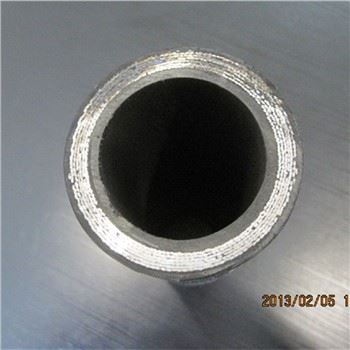
Now, how is that number calculated? Hydraulic hoses aren’t just rubber with a thread inside. There are three main parts: the inner tube (holds the fluid), the reinforcement layers (the strength part), and the outer cover (protects the inner tube from cuts, oil, weather, rocks, whatever). The reinforcement is where the tensile strength lives. Most common hoses for construction, agriculture, and industrial use have either spiral wire reinforcement or braided wire. Braided is the standard for lighter stuff—like shop presses or small loaders—and spiral is for high-pressure heavy-duty jobs, like excavators or mining equipment.
Let’s get specific with real numbers (I promise these aren’t pulled out of thin air, these are the specs we use every day for our inventory). For a basic SAE 100R2AT hose—this is the braided one, super common for general hydraulic work like skid steers or repair shop tools—what’s the tensile strength? For a ¼-inch diameter R2 hose, it’s around 5,000 pounds of force. A ½-inch R2 jumps up to roughly 18,000 pounds. That’s wild, right? A ½-inch hose that looks like a thick garden hose can hold more than 9 tons of pull before it snaps. Now the spiral stuff, SAE 100R15—this is for the big boys, 4,000+ PSI working pressure. A ¾-inch R15 hose has a tensile strength of over 60,000 pounds. That’s 30 tons. To put that in perspective, a full-grown male African elephant is about 6 tons—this hose can hold 5 elephants before it breaks. No cap.
But wait, I have to add a huge disclaimer here: that’s the lab-tested, ideal condition tensile strength. In the real world, this number drops hard if you mess up. A lot of customers ask “why did my hose break at 12,000 pounds when the spec says 18k?” And nine times out of ten, it’s one of these three mistakes. First, bad installation: if you crimp the fitting too tight, you slice the reinforcement wires. Crimp it too loose, the fitting pulls off instead of the hose itself. Second, abrasion: if you run the hose across sharp metal or leave it rubbing against a concrete bucket every day, the outer cover wears through and the reinforcement wires get nicked. Even a tiny nick in a wire can cut the total tensile strength by 20% or more. Third, heat or chemical exposure: if you leave hoses near a welding torch or drain cleaner, the rubber and wires degrade over time. That 18k hose might only hold 10k after a year of sitting next to a furnace.
I’ve seen this play out too many times. Last year, a small construction company called me panicking because their excavator hose snapped halfway through a job, costing them $2,000 in downtime. They said it should have been good for 18k tensile, but when we tested the old busted hose, it only held 11k. Turns out they’d been running it against the sharp edge of their bucket for months without replacing it—nicks all along the reinforcement layers killed its strength way before it hit the theoretical limit. That’s why we always tell customers: tensile strength is a spec, but actual on-the-job strength depends on how you treat the hose.
Another common question: do all hoses have the same tensile strength per size? No way. There’s SAE specs, but there’s also ISO, and brand-specific stuff. I can tell you from selling that name-brand hoses (like Gates or Parker, which we carry exclusively) have way more consistent tensile strength than no-name cheap hoses from a random online site. A cheap no-name ½-inch hose might say it has 18k tensile, but in reality it’s flimsy wire that only hits 10k. We test every batch of the hoses we stock, so I can promise you the numbers we list on our site are accurate—no false advertising, no cutting corners on reinforcement.
Let’s also talk about why tensile strength matters more than you think. It’s not just about the hose breaking. If a high-pressure hydraulic hose fails, it’s not just a split line—hydraulic fluid can spray at 100+ MPH, that stuff can pierce skin, cause serious burns, or start a fire if it hits hot surfaces. I’ve heard stories of guys getting fluid in their eyes from a snapped hose, or smaller leaks spraying on hot exhaust and igniting. That’s why the safety factor is built into every hose. The standard safety factor for hydraulic hoses is 4:1 to 4:1. That means the working pressure is 1/4 of the tensile strength. So if a hose has 20,000 PSI tensile strength, its maximum working pressure is 5,000 PSI. That extra margin is there because we never want you operating at the edge of failure.
Wait, can you test tensile strength on your own without a lab? Probably not accurately, but there’s a quick pre-install check you can do. When you get a new hose, inspect the reinforcement layer through the ends where the fitting is attached. Look for frayed wires, kinks, or dents in the hose. If you see any of those, send it back—don’t use it. A kink in a hose cuts its tensile strength by almost half, because it damages the wire reinforcement inside.
Now, a lot of people ask if higher tensile strength is always better. Not really. For a small residential project, like a lawn and garden tractor or a small wood splitter, a lower tensile strength hose is fine, it’s cheaper and works perfectly. But if you’re running a 50-ton excavator or a mining truck that works 12 hours a day, you need that heavy spiral-reinforced hose with the super high tensile strength. Matching the hose to the job is way more important than grabbing the strongest one you can find.
Let me share a recent example to drive this home. Last month, a farmer called me because his new hay baler hose broke during harvest season. He’d bought a cheap R2 hose, the basic braided one, for around $20. The baler required a hose with a 30,000 PSI tensile strength, but the R2 only had 18k. Under the constant heavy pressure of baling hay, the hose stretched beyond its tensile limit and snapped mid-job. He had to wait 2 days for a replacement, costing him thousands in lost hay. When he upgraded to the correct heavy-duty hose with 35,000 PSI tensile strength, it ran for 6 months straight without a single issue. That’s the difference between knowing your tensile strength and guessing.
So to wrap this up: tensile strength of a hydraulic hose is the maximum pull force it can handle before breaking, it’s determined by the wire reinforcement layers, standard for common hoses ranges from 5,000 pounds (small braided) to 60,000+ pounds (large spiral), and this number is only accurate if the hose is installed and used correctly without damage. Don’t confuse it with working pressure, always match your hose’s tensile strength to your job requirements, and skip the cheap no-name stuff—your crew and your wallet will thank you.
If you’re not sure which hose you need, or you just want to double-check the tensile strength specs for your specific equipment, hit me up. I don’t do pushy sales pitches, I just help guys get the right hose that’ll get the job done without breaking mid-use. Reach out to our team to chat through your needs, and we’ll hook you up with the right hose for your job, no guesswork.
Steam Hose References
SAE International. (2020). Hydraulic Hose Standards (SAE 100 Series). SAE International.
ISO 1436. (2019). Rubber and plastics hoses and hose assemblies for hydraulic transmission – Dimensions and working pressures. International Organization for Standardization.
Gates Corporation. (2022). Hydraulic Hose Engineering Handbook. Gates Corporation.
Parker Hannifin Corporation. (2021). Industrial Hose and Fittings Catalog. Parker Hannifin Corporation.
Occupational Safety and Health Administration (OSHA). (2018). Hydraulic Hose Safety Guidelines for Construction and Agriculture. U.S. Department of Labor.
Hebei Qianli Rubber Products Co., Ltd.
As one of the most professional hydraulic hose manufacturers and suppliers in China, we have world-leading production equipment and strong manufacturing capabilities. Please feel free to buy bulk durable hydraulic hose made in China here from our factory.
Address: West industrial Zone, Jing County, Hengshui City, Hebei Province, China.
E-mail: manager@hebeiqianli.com
WebSite: https://www.qianlirubber.com/
