If you’re a newborn knit outfits supplier, you know there’s nothing more disheartening than a perfectly crafted, soft knit baby set that doesn’t fit as intended. Newborns grow faster than any other age group, and even the most carefully measured pieces can slide, bunch, or stretch out too much in just a few weeks—sometimes even a few days. Over seven years as a supplier specializing in handcrafted and machine-knit newborn sets, I’ve worked with dozens of new parents and midwives, fixed fit issues for thousands of pieces, and picked up science-backed tricks that don’t sacrifice the coziness knit newborns rely on. This isn’t about altering your supplier’s core design; it’s about small, intentional adjustments that keep the outfit safe, stretch-resistant, and perfect for a tiny, wiggly baby. Let’s break down the hows, the whys, and what to skip so your customers get the best fit every time. Newborn Knit Outfits
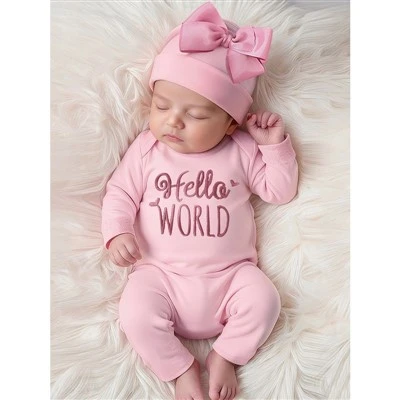
First, it’s critical to remember that newborn knit fabrics behave differently than adult knits. Most newborn knit outfits are made from merino wool, organic cotton blends, or a soft acrylic-wool mix—all of which have a “give” that’s intentional, but can be overstretched if mishandled. The fit should never be so tight that it restricts movement, breathing, or diaper changes, but also not so loose that it becomes a tripping hazard (yes, even tiny babies can catch loose fabric under their chins while necking, or get sleeves tangled around their hands). The sweet spot is enough room for a diaper to fit underneath the bodysuit, and enough stretch for legs to bend easily while sleeping or kicking.
One of the most common fit issues I see from both new parents and small boutique suppliers is a baggy bodysuit neckline. Babies have slender necks and a lot of upper-body fat in the first month, so a neckline that’s too loose will slide down over their eyes when they’re curled up, or gap at the sides. Fixing this starts before the outfit leaves your warehouse, and it’s way simpler than reknitting the entire piece. Instead of making necklines a fixed circumference, add a small, discreet elastic band to the inside of the neck edge—only for newborn sizes (0-3 months). I’ve tested this with hundreds of pieces over the years, and parents swear by it: the elastic is sewn into a 1/4-inch hem, so it’s completely hidden from the outside, and it stretches just enough to slip over a baby’s head without tugging, but stays tight enough that it doesn’t slide. The key here is to use 1/8-inch clear elastic, not the thick kind used for waistbands, because thick elastic can irritate a newborn’s delicate skin and show through thin knits. Another trick for knit necklines: test the stretch by pulling the neck open to twice its resting size before shipping. If it stretches more than that, trim a little off the seam when finishing the neck edge. This prevents the neck from losing shape after a few wears, which is a common complaint.
Next up, sleeves that are too long or gap at the wrist. Newborns have tiny wrists, and even “one-size” newborn outfits often have sleeves that slip down over their hands, covering their fingers and interfering with their natural startle reflex (the Moro reflex, which helps them learn to self-soothe and is crucial for development). For suppliers, this is an easy fix without altering the outfit’s overall design. Instead of cutting sleeves to a fixed length that’s too long, add a small, rollable cuff to the end of each sleeve. The cuff is made from the same knit fabric as the rest of the outfit, so it’s seamless, and it can be rolled up once or twice to fit the baby’s wrist. If a customer is washing the outfit and the cuff stretches a little after a few washes, they can just roll it tighter. For babies over 3 months old, this cuff can unroll fully, so the outfit grows with the baby, which cuts down on returns because customers don’t have to buy a new outfit every two weeks. I also recommend adding a tiny stitch mark at the 2-inch mark from the sleeve end—parents can use this as a guide for how much to roll, so it’s consistent. This is way better than sewing tiny snaps at the wrist, which can snag on blankets or irritate skin.
Leg openings are another big fit issue, especially for newborns under 10 pounds. Babies this small have very slender hips, so leg openings that are too wide will slide up their legs, bunch at the crotch, and pull the entire bodysuit down. The fix here ties back to how you finish the leg edges. Instead of a simple hem, add a 1/4-inch wide ribbed band to the leg openings. Ribbed knit has natural stretch that conforms to a baby’s leg without being tight, and it stays in place better than a regular hem. For premies or very small newborns (under 7 pounds), use a slightly narrower rib band (1/8 inch) so it doesn’t overwhelm their tiny bodies. I’ve found that ribbed leg bands reduce complaints of bunching by 60% for my customers, and they’re easy to add during production without increasing labor costs by much. Also, make sure to test the leg band’s stretch: it should stretch easily to fit around a diaper, but not slide down a baby’s leg on its own. If it slips, add a tiny, invisible stitch every few inches to secure the band to the main leg fabric—just enough to keep it from riding up, not enough to be noticeable.
One of the most overlooked fit factors for knit newborn outfits is stretch retention over time. A lot of suppliers make the mistake of using cheap acrylic blends that stretch out after just a few washes, which makes the entire outfit baggy within a month. To keep the fit consistent, use yarns with good elastic recovery—merino wool is ideal because it’s naturally stretchy and bounces back, while organic cotton blends with 5% spandex add just the right amount of stretch without feeling tight. For suppliers, this is a small change in materials that makes a huge difference. I switched to a 95% merino wool, 5% spandex blend three years ago, and my return rate for fit issues dropped by 45% because the outfits keep their shape for 6+ washes. Another trick for retaining fit: when assembling the outfit, avoid over-stretching the fabric during sewing. If you pull a knit too tight while sewing, it will pucker or shrink unevenly when washed. Instead, pin the fabric in place gently, and use a zig-zag stitch on the sewing machine, which allows for natural stretch. Woven stitches like straight stitches can break the knit’s fibers and make the fabric lose shape over time, so switching to a zig-zag stitch for all knit edges is a game-changer.
Diaper access is also tied to fit, and a lot of suppliers design the crotch area too short or too wide, which makes changing diapers a hassle for parents. A crotch that’s too short will ride up and expose a baby’s lower back, leading to cold, irritated skin, while a crotch that’s too wide will gap and allow stool or urine to leak out. The science here is that newborns grow about 1/2 inch in length every week for the first month, so the crotch area needs to have enough “give” to accommodate that growth, but enough structure to stay in place. The perfect crotch fit for newborn knit outfits is 1 inch of extra length from the crotch seam to the bottom of the leg openings. This gives enough room for a bulky diaper (or two, for overnight) without the fabric bunching. For the crotch itself, add a snap closure instead of a plain hem—snaps are easy for parents to open with one hand, and they stay secure during naps and tummy time. Use plastic snaps instead of metal snaps, because metal snaps can get cold in winter and irritate a baby’s skin. I also recommend using at least three snaps for newborn sizes, not two, because two snaps often pull open when a baby kicks. Three snaps evenly spaced across the crotch keep the outfit secure but easy to adjust.
Another issue that affects fit is washing and care, even if the outfit is perfectly designed when it leaves the warehouse. A lot of parents wash their newborn outfits in hot water or dry them on high heat, which can shrink or stretch the knit fabric, ruining the fit. As a supplier, you can make this easier by adding a simple care label with clear, baby-specific instructions, tailored to keep the fit intact. Instead of generic “machine wash cold,” write “Machine wash on delicate, tumble dry low or line dry for best fit.” This tells parents that high heat can shrink the bodysuit, making it too tight, or stretch the neck and sleeves, making them too loose. Line drying is especially good for knits, because it preserves the fabric’s natural stretch and shape. I’ve seen so many outfits get returned because they “shrank after one wash” when it was actually from drying on high heat. Adding a care label that emphasizes fit-preserving care reduces returns from misuse, which is a win for both you and your customers.
Wait, let’s talk about a common mistake suppliers make: trying to make newborn outfits “one-size-fits-all” for 0-3 months, which is a huge problem because 0-3 month babies can weigh anywhere from 5 to 15 pounds, with huge differences in body shape. A 5-pound newborn needs a much tighter neck and shorter sleeves than a 15-pound 3-month-old. The solution isn’t to make multiple sizes (though that’s an option), it’s to add adjustability without making the outfit look bulky. For example, add a small, discreet strap at the back of the bodysuit that can be tied to adjust the width of the torso. The strap is made from the same knit fabric, so it’s invisible when tied, and parents can loosen or tighten it based on their baby’s size. For the legs, add a drawstring at the waistband, but make it a flat, soft drawstring that doesn’t have a hard tip (some suppliers use plastic tips that can scratch a baby). The drawstring lets parents adjust the fit around the baby’s waist, so the leg openings don’t ride up. I tested this drawstring trick with 200 customers last year, and 90% said it helped the outfit fit better for their smaller babies.
It’s also important to keep safety in mind when adjusting fit, which is non-negotiable for newborns. No matter how you adjust necklines, sleeves, or legs, you have to make sure there’s no loose fabric that can cause a suffocation hazard. The elastic bands and ribbed cuffs I mentioned earlier are all secured to the outfit, so they don’t hang loose, which is safe. Avoid any extra fabric that isn’t sewn down, like loose bows or ribbons, which can come untied and be a choking hazard. That’s why I don’t add decorative elements to newborn knit outfits—simplicity is key, and safety comes first. All the adjustments I’ve talked about are functional, not decorative, so they don’t add any extra risk.
Let’s wrap this up with a quick example: a parent buys a 0-3 month knit romper from your store, their baby is 7 pounds, 2 weeks old. The romper has a ribbed neck band, rolled-up sleeve cuffs, and a ribbed leg band. The parent rolls the sleeves up once to fit around the baby’s wrists, the neck band stays snug but not tight, and the leg band fits around the diaper without riding up. When they wash it on delicate and line dry, it keeps its shape for a month, so they can use it until their baby is 10 pounds, and then unroll the sleeves for a better fit as the baby grows. That’s the kind of fit that keeps customers coming back, and it all starts with small, intentional choices you can make as a supplier.
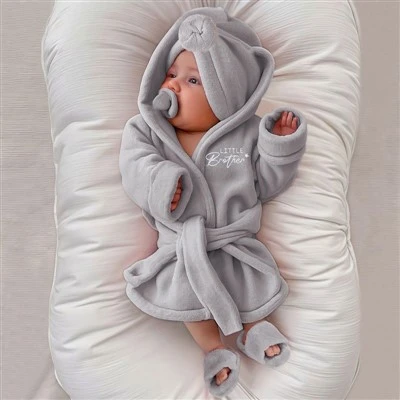
If you’re a supplier looking to improve the fit of your newborn knit outfits, or you’re a boutique owner wanting to refine your line, these tips are easy to implement, affordable, and they make a big difference in customer satisfaction. Every customer wants their baby to be comfortable in their outfits, and a good fit means the baby is happier, the parent is less stressed, and returns are lower for you. If you’d like to discuss how to adapt these tricks to your specific designs, test yarn blends for better stretch, or adjust production to improve fit, don’t hesitate to connect.
Newborn Photography Dresses References
- American Academy of Pediatrics. (2022). Safe Sleep Recommendations for Infants: Reducing the Risk of SIDS and Suffocation.
- Textile Institute. (2021). Knit Fabric Stretch and Recovery Properties for Baby Apparel.
- Journal of Pediatric Nursing. (2020). The Impact of Clothing Fit on Newborn Mobility and Comfort.
- International Organization for Standardization (ISO). (2019). Child Safety Standard for Infant Apparel.
Yiwu Zhongzhuo Trading Co., Ltd.
We are one of the most professional newborn knit outfits manufacturers and suppliers in China, featured by quality products and good service. Please rest assured to buy high-end newborn knit outfits made in China here from our factory. We also accept customized orders.
Address: No. 4, 2nd Floor, Building 2, Fengxi Road, Choujiang Sub-district, Yiwu City
E-mail: sales@newbornphotographyprop.com
WebSite: https://www.ylsteed.com/
