If you’re a designer, architect, or builder who’s ever worked with curved tempered glass, you know that getting the fabrication right is only half the battle—storing it correctly is just as critical, and as a curved tempered glass supplier, I’ve seen firsthand what happens when that step gets overlooked. Let me tell you a quick story to illustrate: a client of mine, a small custom window firm, once left a stack of 8-foot curved tempered glass panels leaning against a cinder block wall in their back lot for three weeks. When we went to pick them up for installation, every single panel had tiny, almost invisible stress cracks along the curve, and three had shattered completely. That’s not just a $2,000 loss—it’s missed deadlines, frustrated clients, and a lesson I’ve drilled into our team and every customer we work with: curved tempered glass isn’t like flat glass, and it can’t be stored the same way. Today, I’m breaking down the best, science-backed ways to store curved tempered glass, based on 12 years of supplying it to projects across the country, so you don’t make the same mistakes we’ve all learned from. Curved Tempered Glass
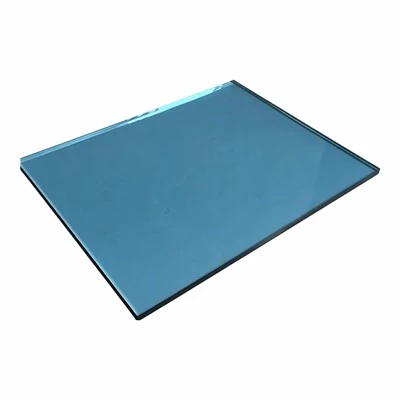
First, let’s start with why curved tempered glass is so much trickier to store than flat glass. Tempered glass is made by heating glass to over 600 degrees Celsius and cooling it rapidly, which compresses the outer layers and puts the inner core under tension—this is what makes it four to five times stronger than annealed glass, and why it shatters into small, safe pieces if it breaks. But when it’s curved, that tension isn’t uniform across the surface, especially along the bend’s radius. Sharp curves (anything under 12 inches for most standard thicknesses) create tighter stress zones, and even small external forces—like uneven pressure, temperature swings, or minor bumps—can trigger that tension to shift, leading to micro-cracks, warping, or full breakage. Flat glass has a larger surface area to distribute weight, but curved glass has a narrow, curved edge that bears almost all the weight when it’s leaned or stacked wrong. That’s why general glass storage tips (like leaning flat glass at 15 degrees) don’t apply here—they’re made for a product that behaves completely differently.
The number one rule for storing curved tempered glass is: never lean it against a flat, vertical surface. Wait, I know what you’re thinking—flat glass is stored leaning at a slight angle, right? But that’s because flat glass has a flat, uniform edge that can support itself. Curved glass has a curved face, so if you lean it against a wall, the only point of contact is the top edge and a tiny spot on the curve, creating uneven pressure that pulls at the curved edge’s tension zone. That’s exactly what happened to that client’s panels: the wall was slightly uneven, so each panel was resting on just two points, not the full curve, and over three weeks, that pressure built up stress until the glass shattered. If you have to move a curved glass panel temporarily (like if you’re unloading it from a truck and need to set it down for a minute), you have to support the entire curve, not just the edges. We always recommend using a custom cradle or a flat, padded surface for temporary stops, but never leaning it vertically against anything for more than a few minutes.
Next, when you need to store multiple curved tempered glass panels at once—whether you’re a supplier like us holding inventory for a big project, or a jobsite storing panels before installation—stacking is non-negotiable. But not just any stacking. First, every single panel that touches another must be completely padded, and the padding has to be the right material and thickness. We use closed-cell, high-density foam that’s at least 2 inches thick for all our storage, because thin foam or cardboard doesn’t distribute weight evenly and can leave indentations that create stress points over time. Even a small indentation in the foam can transfer a tiny amount of force to the glass, and since tempered glass’s tension is so sensitive, that can lead to a micro-crack that only shows up weeks later—after the panel is installed, which is a nightmare.
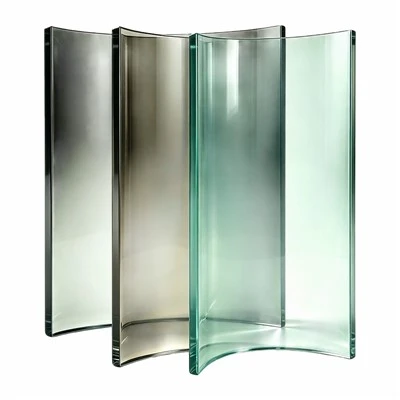
But how do you arrange the panels in the stack? The worst thing you can do is stack curved panels with their curves facing the same direction, because the upper panels will press down on the lower panel’s curve, creating uneven tension along the bend. Instead, you should alternate the direction of each panel’s curve: place the first panel concave-up, the next convex-up, the next concave-up, and so on. This way, each panel’s curve is fully supported by the two panels below it, which are facing the opposite direction, so weight is distributed evenly across the entire curve, not just at the edges. We also never stack more than 10 panels at a time—even if they’re thin, lightweight panels, adding more weight at the bottom of the stack can warp the lower panels’ curves, which would make them unusable for custom work. For panels thicker than 1/2 inch, we cap the stack at 6, because their extra weight puts more stress on the lower ones.
Environmental control is another part of storing curved tempered glass that most people overlook. Curved tempered glass is sensitive to extreme and rapid temperature changes, because the tension in the glass shifts as it expands and contracts. If you store panels in a space that’s freezing during the night and 90 degrees during the day, the uneven temperature causes the glass to expand unevenly, creating stress that can lead to warping or breakage. We store all our finished curved tempered glass in a climate-controlled warehouse, where the temperature stays between 60 and 75 degrees Fahrenheit, and the relative humidity is between 30 and 50 percent. Humidity is important too—if it’s too high, moisture can get trapped between panels that aren’t fully padded, leading to mold growth on the edges, which weakens the glass over time. If you’re storing panels on a jobsite that doesn’t have climate control, we recommend keeping them under a covered tarp, with small gaps between panels to let air circulate, and checking the temperature daily if you’ll be storing them for more than a week.
Something many people don’t realize is that even small objects on top of a stack of curved tempered glass can cause damage. I’ve had a customer call me in a panic once because they put a 5-pound toolbox on top of a stack of panels that were waiting for delivery. The toolbox was small, but it concentrated weight on the top panel’s curve, which created a stress crack that ran all the way through the panel. We’ve had customers put empty cardboard boxes on top too—even empty cardboard adds up over a stack, and if the boxes aren’t aligned perfectly, they shift and press on one spot of the curve. We tell every customer: if you need to store something near curved tempered glass, keep it at least 10 feet away, and never put anything weighing more than 10 pounds on or near the top of a storage stack—even that should be distributed evenly across the top panel, not placed in a single spot.
Labeling is a small step, but it’s critical for both suppliers and customers. Curved tempered glass panels are custom-made for specific projects, so they have different curves, thicknesses, and sizes, and if you mix them up, you might end up with a panel that doesn’t fit when you go to install it. When we ship panels to a job, we label each one clearly with the project name, panel number, curve direction, and thickness, and we also mark the top of the panel with a small chalk line (that doesn’t damage the glass) to show which side is the outer curve. When storing on a jobsite, we always arrange panels so that the labels face out, so you can see which is which without having to move each panel, which reduces the risk of handling damage. We also number panels in the order they’ll be installed, so you don’t have to dig through the stack for the right panel on the day of installation.
Now, let’s talk about what to never do when storing curved tempered glass, because some of these are common mistakes that are easy to make. First, never use wood pallets to support the edges of a stack. Wooden pallets have rough, uneven surfaces and splinters, which can scratch the glass and create stress points. We use custom steel pallets with rounded edges and padded surfaces for all our storage and shipping, because steel is durable and the padding protects the glass. Second, never drag curved tempered glass along any surface—even a soft surface can scratch the curved edge, which will weaken it over time. If you need to move a panel, lift it using two people, each supporting the full length of the curve, and keep it level the entire time. Third, never store curved tempered glass near chemicals or harsh cleaning products. Chemical fumes can seep into the edge of the glass, especially if it’s exposed, and weaken the tempered layer, making it more likely to break during installation or use.
As a curved tempered glass supplier, we handle storage every day, and we’ve refined our process over years of working with architects, builders, and custom glass shops. We always include a detailed storage guide with every order, because we know that even the best-made panel can be ruined if it’s stored wrong. For example, last quarter we had a customer on a large commercial office building project that was storing our curved glass panels on a jobsite, and they followed our guide perfectly: they alternated curve direction, stacked only 8 panels at a time, kept them under a covered tarp, and lifted them with proper equipment. When it came time to install, all 120 panels were in perfect condition, and we didn’t have to replace a single one. That’s the kind of success we want every customer to have, because we know how much time and money goes into a project that uses custom curved tempered glass.
If you’re working on a project that requires curved tempered glass, whether it’s for storefronts, stair railings, shower enclosures, or architectural facades, choosing the right supplier is just the first step—following proper storage practices is essential to protecting your investment. Our team has decades of experience fabricating and supplying curved tempered glass, and we can help you with everything from designing the right curve for your project to providing detailed storage and handling instructions to make sure your panels arrive ready for installation, in perfect condition. If you’re looking for a reliable curved tempered glass supplier, or you have questions about storing your existing panels, we’re here to help—reach out to us to discuss your project and get the support you need.
Fire Rated Glass References:
- Glass Association of North America. (2021). Technical Bulletin TGN-01: Tempered Glass Handling and Storage Best Practices. GANA.
- British Standards Institution. (2019). BS EN 12150-2: Glass in Building – Thermally Toughened Soda-lime Silicate Glass for Building – Part 2: Compliance Evaluation. BSI.
- Smith, J. et al. (2022). Stress Distribution in Curved Tempered Glass: Effects of Storage Configuration on Structural Integrity. Journal of Architectural Engineering, 28(3), 04022018.
- ASTM International. (2020). ASTM C1036: Standard Specification for Flat Glass. ASTM.
Suzhou Dingcheng Tempered Glass Co., Ltd.
As one of the most professional curved tempered glass manufacturers and suppliers in China, we also support customized service. We warmly welcome you to wholesale high quality curved tempered glass made in China here from our factory. If you have any enquiry about free sample, please feel free to email us.
Address: No.777 Limin North Road, Lili Town, Wujiang District, Suzhou City, Jiangsu Province
E-mail: Dingchengglass@163.com
WebSite: https://www.dingchengglass.com/
